If you have ever typed “content creator income Bangladesh” into Google, you already know the problem: the top results are salary-aggregator pages built on a handful of anonymous submissions, and several of them are quietly wrong. One popular page reports a Dhaka content creator median of BDT 14,000 per month in one section and then, three scrolls down, calls that exact same figure an annual salary. Another page ranking for Bangladesh fills its “recent salaries” table with creators in Atlanta, Los Angeles and Tucson, paid in US dollars.
So let us do this properly. This guide breaks down what content creators in Bangladesh actually earn in 2026 — separated by how they earn (job salary, platform payouts, brand deals, client work), grounded in real platform mechanics, and updated for the single biggest change of the year: under the Finance Act 2026, effective 1 July 2026, content creation income in Bangladesh is now income-tax exempt and the 15% VAT on creator services has been withdrawn.
KEY TAKEAWAYS
- There is no single “creator salary” in Bangladesh. An employed in-house creator and an independent creator earn from completely different systems. Mixing them is why the salary sites look broken.
- Employed creators (agency/brand staff): roughly BDT 12,000–30,000/month entry-level in Dhaka, rising past BDT 60,000–100,000+ for senior roles with video and strategy skills.
- Independent creators earn in a barbell shape. Most make under BDT 10,000/month for the first year. A working full-time tier sits around BDT 40,000–150,000/month. A small top tier earns several lakh.
- Ad revenue alone rarely pays the bills here. Bangladesh sits in the lowest global CPM tier, so a Bangladeshi audience is worth a fraction of a US audience per view. Brand deals and client work carry most creator income.
- TikTok’s Creator Rewards Program is not available in Bangladesh as of 2026. Any guide telling you to “join the TikTok fund” from Dhaka is out of date.
- Tax changed in your favour this year. The Finance Act 2026 removed income tax on content creation income, waived the 15% VAT on creator services, and withdrew the 7.5% source tax on foreign earnings — provided the money arrives through a formal banking channel.
What is in this guide
- The short answer: what creators actually earn
- Why the salary websites get Bangladesh wrong
- Two very different kinds of “content creator”
- Path 1: Salaried content creator jobs in Bangladesh
- Path 2: Facebook monetisation earnings
- Path 3: YouTube ad revenue — the Bangladesh CPM reality
- Path 4: TikTok — what actually works from Bangladesh
- Path 5: Brand deals (where the real money is)
- Path 6: Client and agency content work
- Realistic income tiers: beginner to full-time to top
- The 2026 tax change every Bangladeshi creator must know
- How to actually receive your money in Bangladesh
- What actually moves your income up
- Frequently asked questions
The short answer: what content creators actually earn in Bangladesh
Content creator income in Bangladesh spreads across an enormous range, and where you land depends far more on which income streams you have switched on than on how many followers you have. Here is the honest picture for 2026:
| Creator stage | Typical monthly income | Where the money comes from |
|---|---|---|
| Beginner (0–12 months) | BDT 0 – 8,000 | Usually nothing. Below monetisation thresholds; occasional product-only gifting |
| Monetised small creator | BDT 8,000 – 35,000 | Facebook/YouTube payouts plus 1–3 small sponsorships |
| Salaried in-house creator | BDT 12,000 – 60,000 | Fixed salary at a brand, agency or edtech company |
| Full-time independent creator | BDT 40,000 – 150,000 | Brand deals as the base, platform payouts as a top-up, some client work |
| Top tier / established name | BDT 200,000 – 800,000+ | Retainer campaigns, multi-platform deals, own products, events |
Read this before you quote any number: these are working ranges observed across the Bangladeshi market in 2026, not audited survey data. Creator income is volatile month to month — a single viral campaign or a single lost sponsor can swing a creator two tiers in either direction. Treat the tiers as a map, not a promise.
Why the salary websites get Bangladesh wrong
This section exists because almost every page currently ranking for this keyword is a salary aggregator, and understanding how their numbers break is the fastest way to stop being misled by them.
Problem 1: the sample sizes are tiny
One major salary site’s Dhaka “Content Creator” figure is built on six anonymous submissions. Its “Digital Content Creator” page for Dhaka rests on two. Six people cannot describe a market with hundreds of thousands of participants. If a page does not tell you its sample size, that is itself a warning.
Problem 2: monthly figures get labelled as annual
The same page displays a range of BDT 7,000–25,000 per month at the top, then states in its FAQ that the average is BDT 13,918 per year and the top of the range is BDT 25,433 per year. Those are the identical numbers with the time unit swapped. A BDT 13,918 annual salary would be roughly BDT 1,160 a month, which no employer in Dhaka pays. The monthly reading is the plausible one; the annual label is a unit-conversion error baked into the template.
Problem 3: the “Bangladesh” page is full of American data
Scroll the recent-submissions table on those Dhaka pages and you find creators in Atlanta, Los Angeles, Culver City, Irvine and Savannah reporting $2,000–$11,000 per month. That is US market data sitting on a page titled for Dhaka. It inflates every blended average the page produces.
Problem 4: global remote payroll data is not local data
One remote-hiring platform lists a median of $18,962 per year for a “remote content creator in Bangladesh” — around BDT 2.3 lakh a month. The tell is in the same dataset: it puts the 10th percentile at $4,326 and the 90th at $224,622. A spread that extreme means the sample is global remote-contract pricing, not what a Bangladeshi creator typically takes home. It is a useful benchmark if you are billing a foreign client in dollars. It is not a Bangladeshi salary.
The takeaway
Salary sites are built to describe salaried jobs. Most Bangladeshi content creators are not salaried — they are independent operators stitching together platform payouts, sponsorships and client work. That is why the aggregator numbers feel so disconnected from what creators around you actually report. The rest of this guide is organised by income stream instead, because that is how the money genuinely arrives.
Two very different kinds of “content creator”
In Bangladesh the phrase covers two jobs that share almost nothing financially.
| Employed content creator | Independent content creator | |
|---|---|---|
| Who pays you | One employer, monthly | Platforms, brands and clients — several sources at once |
| Income stability | Predictable, slow growth | Volatile, no ceiling |
| Who owns the audience | The company | You |
| Realistic year-1 income | BDT 12,000–25,000/month | Often close to zero |
| Realistic year-3 income | BDT 35,000–70,000/month | BDT 0 to several lakh — entirely outcome-dependent |
Most people reading this want the second path but need the first to survive while building it. That combination — a salaried content job funding an independent channel on evenings and weekends — is the most common realistic route in Dhaka right now. If you are still deciding, our guide on how to become a content creator in Bangladesh walks through the starting decisions.
Path 1: Salaried content creator jobs in Bangladesh
This is the one number the salary sites should be good at. Cleaned of the American rows and the annual/monthly confusion, their Dhaka data points to a median around BDT 14,000 per month for a junior content creator, with a typical band of BDT 7,000 to 25,000. That matches what entry-level listings in Dhaka advertise.
Company-level figures from the same dataset show the spread clearly — established corporates and specialist agencies pay meaningfully more than small content shops:
| Employer type | Reported monthly total pay |
|---|---|
| Large corporate / FMCG group | BDT 26,000 – 28,000 |
| Specialist digital agency | BDT 17,000 – 26,000 |
| Mid-size marketing firm | BDT 14,000 – 16,000 |
| Small agency / startup | BDT 6,000 – 10,000 |
What raises a salaried creator’s pay fastest
The jump from BDT 15,000 to BDT 50,000+ in a salaried role is not about seniority alone. In the Dhaka market, three capabilities move a package hardest:
- End-to-end video. Shooting and editing without needing a separate editor roughly doubles your value to a small team.
- Performance literacy. Being able to read reach, retention and cost-per-result — and change the content accordingly — separates a creator from a content operator.
- An audience of your own. Candidates who already run a channel with real engagement negotiate from a different position, because they bring distribution with them.
That third point is the reason so many salaried creators keep building their own channel. It is also why a strong personal brand compounds faster than a job title.
Path 2: Facebook monetisation earnings
Facebook is the default platform for Bangladeshi creators, and Meta has been paying out heavily — the company reported paying creators nearly $3 billion globally in 2025, its highest annual total. But the mechanics matter enormously, and this is where most local guides go stale.
What you actually need to qualify
The quantitative thresholds are the same in Bangladesh as everywhere else. Availability, not the numbers, is the real gate:
- In-stream ads: 5,000 followers plus 60,000 watch minutes in the preceding 60 days.
- Facebook Stars: 500 followers. This is the most accessible starting point for a Bangladeshi creator.
- The unified Content Monetization Program: as of mid-2026 this remains invite-only. There is no published follower count that guarantees entry — you express interest in the Professional Dashboard and wait.
- Age and compliance: 18+, an eligible country, and a clean record against Meta’s partner monetisation policies.
What the payouts look like
Meta shares roughly 55% of ad revenue with creators. Your take-home is measured in RPM — revenue per thousand qualified views — and this is where Bangladeshi creators need honest expectations. Global RPMs cluster in the $1–$4 range, but that figure is dominated by high-value Western audiences. A page whose viewers are overwhelmingly Bangladeshi will sit far below it, often in the range of a few cents to a few tenths of a dollar per thousand views.
Two structural details are worth knowing:
- Qualified views, not total views. Your dashboard distinguishes between views that can earn and views that cannot. Estimating income from your total view count will overstate it, sometimes badly.
- Video length changes the maths. In-stream ads only run on videos of at least three minutes. Shorter videos get pre-roll only, which earns far less.
Facebook Stars are worth roughly $0.01 each to the creator side of the ledger, so 10,000 Stars from an engaged audience is around $100 — roughly BDT 12,000 at current rates. For creators with a genuinely loyal community, Stars can outperform ad revenue, which is why you see so many Bangladeshi pages actively asking for them.
The payout threshold that traps new creators: Facebook holds your money until the balance reaches $100 (about BDT 12,000). Below that, earnings roll over to the next month. Plenty of Bangladeshi creators earn for four or five months before seeing a single payment land. That is normal, not a fault.
For the full application walkthrough, see our guide to the Facebook Content Creator Program and how to join from Bangladesh.
Path 3: YouTube ad revenue — the Bangladesh CPM reality
YouTube pays more reliably than Facebook per view, but the country factor is brutal and no local guide should hide it. Advertising markets are tiered, and Bangladesh sits in the lowest tier alongside India, Pakistan, Indonesia and Nigeria — markets with huge viewership and low per-view ad value.
Here is what that means in practice. YouTube takes 45% and pays you the remaining 55%, so your RPM lands at roughly 40–55% of the CPM advertisers pay:
| Audience location | Typical long-form RPM | Earnings per 100,000 views |
|---|---|---|
| United States | $8 – $20 | Roughly BDT 96,000 – 240,000 |
| South Asia (incl. Bangladesh) | $0.50 – $3 | Roughly BDT 6,000 – 36,000 |
| Shorts (any market) | $0.03 – $0.08 | Roughly BDT 360 – 960 |
The Shorts trap: a Bangladeshi Shorts channel pulling one million views a month may earn only about $30–$80 — roughly BDT 3,600–9,600. Shorts revenue is pooled across all creators in a viewing session rather than paid per ad, and music licensing is deducted from the pool. Shorts are a superb growth engine and a poor income engine. Use them to build the audience, then convert that audience on long-form and sponsorships.
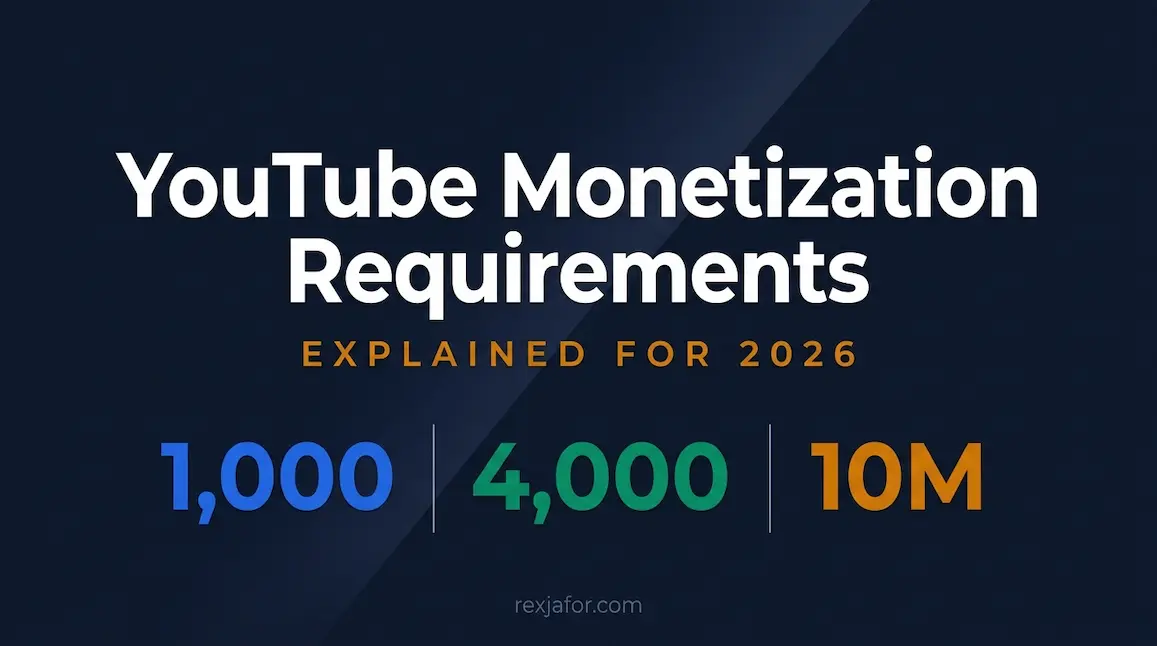
To join the YouTube Partner Program you need 1,000 subscribers plus either 4,000 valid public watch hours in 12 months or 10 million Shorts views in 90 days. Full detail is in our breakdown of YouTube monetization requirements for 2026, and if you are starting without a camera, you can launch a channel with just a phone.
The strategic conclusion for Bangladeshi creators is straightforward: if ad revenue is your goal, either produce content in a high-CPM niche such as finance, business, software or education, or build content that attracts diaspora and international viewers. A Bangla-language entertainment channel with a domestic audience will grow fast and monetise slowly. That is not a failure of your content — it is the ad market. Our guide to the most profitable content niches in Bangladesh covers this trade-off in depth.
Path 4: TikTok — what actually works from Bangladesh
This is the section most Bangladeshi guides get wrong, so read it carefully before you build a TikTok income plan.
The TikTok Creator Rewards Program is not available in Bangladesh. As of 2026 the programme — TikTok’s main pay-per-view system — is confirmed in a short list of markets including the United States, United Kingdom, Germany, France, Japan, South Korea, Brazil and Mexico. Bangladesh is not among them. You cannot join it from Dhaka, no matter how many followers or views you have.
You will find people selling “US/UK account” workarounds. Do not do it. TikTok requires you to be physically located in an eligible country, not merely registered there. Using a VPN to fake your location breaches TikTok’s terms and the documented consequence is a permanent ban plus forfeiture of accumulated earnings. Losing an audience you spent two years building is a catastrophic trade for a payout you were never going to reliably withdraw.
What Bangladeshi creators can actually earn from on TikTok
- LIVE gifting. Available in a far wider set of markets than Creator Rewards. Viewers send paid virtual gifts during a livestream, which convert to a withdrawable balance. For creators who can hold an audience live, this is the most direct TikTok income route from Bangladesh.
- Brand deals. Entirely independent of TikTok’s payout programmes. A Bangladeshi brand pays you directly, so the country restriction is irrelevant. This is where the majority of TikTok creator income in Bangladesh comes from.
- Affiliate and commission arrangements. Where the merchant supports it, commission-based deals typically run 5–20% of sales driven.
- Traffic redirection. Use TikTok’s unmatched organic reach to move viewers to a monetised Facebook page or YouTube channel where you can collect platform revenue.
The practical read: treat TikTok in Bangladesh as an audience-building and deal-winning machine, not a payout machine. Our guide on how to grow on TikTok in Bangladesh covers the growth side.
Path 5: Brand deals — where the real money is
Here is the single most important fact in this entire guide: for most successful Bangladeshi creators, brand deals contribute far more income than all platform payouts combined. The reason is structural. Platform ad revenue is priced against Bangladesh’s low advertising CPM. A brand deal is priced against a Bangladeshi brand’s marketing budget — a completely different and much larger pool of money.
Local market rates for sponsored content in 2026 look roughly like this:
| Creator tier | Followers | Typical rate per content piece |
|---|---|---|
| Nano | 1,000 – 10,000 | BDT 2,000 – 15,000 (often product-only at the smallest end) |
| Micro | 10,000 – 100,000 | BDT 15,000 – 60,000 |
| Mid-tier | 100,000 – 500,000 | BDT 60,000 – 200,000 |
| Macro / established name | 500,000+ | BDT 150,000 – 500,000+ per campaign |
The nano band is the one with hard local grounding — Bangladeshi agencies report paying roughly BDT 2,000–15,000 per content piece at that tier, and running campaigns with 10–30 nano creators rather than one big name. The higher bands are working market observations and vary far more, because at that level nobody publishes a rate card and everything is negotiated.
What actually determines your rate (it is not follower count)
- Engagement rate. A 15,000-follower creator with genuine comment activity out-earns a 90,000-follower page with dead engagement. Bangladeshi brands have become noticeably better at spotting the difference.
- Usage rights. If the brand wants to run your video as a paid ad, that is a separate licence and should add substantially to the fee. Handing over usage rights for free is the most common way Bangladeshi creators underprice themselves.
- Exclusivity. Agreeing not to work with competing brands for three months has real cost. Price it.
- Niche. Finance, tech, real estate and education attract higher budgets than general entertainment, for the same reason those niches have higher CPMs.
- Deliverable count. A bundle of one video plus three stories plus usage rights is a different product from a single post.
If you are not yet charging confidently, two things fix that faster than anything else: a proper media kit and a documented rate card. We also cover how to get brand deals as a small creator, which is the harder problem when you are starting out.
Path 6: Client and agency content work
The least glamorous income stream and, for a large share of Bangladeshi creators, the one that actually pays rent. Instead of building your own audience, you produce content for someone else’s.
| Service | Typical local pricing |
|---|---|
| Social media content retainer (small business) | BDT 8,000 – 25,000/month |
| Full social package (agency-level, BD brand) | BDT 40,000 – 120,000/month |
| Short-form video editing (per video) | BDT 500 – 3,000 |
| International client work (per hour, remote) | $8 – $30 depending on skill and portfolio |
The international column is where the leverage sits. Bangladesh has roughly 500,000 freelancers working in digital services and content creation, and a creator billing a foreign client in dollars escapes the low domestic CPM entirely. The same editing skill is worth BDT 1,500 locally and $25 internationally. That gap is the strongest single argument for building a portfolio aimed outward as well as inward.
Realistic income tiers: beginner to full-time to top
Putting the streams together, here is what a Bangladeshi creator’s income mix typically looks like at each stage. Note how the composition shifts — not just the total.
| Stage | Monthly total | Where it comes from |
|---|---|---|
| Months 0–6 | BDT 0 | Below every threshold. This stage is unavoidable and is where most people quit. |
| Months 6–18 | BDT 3,000 – 20,000 | First Stars income, first small sponsorships, occasional gifting |
| Year 2 | BDT 25,000 – 70,000 | Roughly 60% brand deals, 25% platform payouts, 15% client work |
| Established full-time | BDT 70,000 – 200,000 | Repeat sponsors on retainer, multi-platform payouts, premium client work |
| Top tier | BDT 200,000 – 800,000+ | Campaign retainers, own products or services, events, agency spin-off |
The pattern worth internalising
At every stage above the first, platform ad revenue is a minority of income. Creators who plan their business around AdSense and Facebook payouts alone tend to plateau around BDT 15,000–25,000 a month and stay there. Creators who treat platform revenue as a bonus and sell their audience’s attention directly to brands break through it.
The corollary: your first 1,000 engaged followers are worth more than your next 50,000 passive ones, because brands buy engagement and platforms pay for geography you cannot change.
The 2026 tax change every Bangladeshi creator must know
This is the most consequential development for creator income in Bangladesh this year, and it is missing from every salary page currently ranking for this topic.
The Finance Bill 2026 was passed by the Jatiya Sangsad on 29 June 2026, gazetted on 30 June, and took effect on 1 July 2026 with the start of fiscal year 2026–27. Presenting the budget, the finance minister proposed extending tax exemption beyond IT freelancing to all forms of freelancing and content creation income, implemented through an amendment to the Sixth Schedule of the Income Tax Act 2023.
What changed for creators from 1 July 2026
- Income tax: income from content creation across digital platforms is exempt. Previously it was taxed at standard rates, with exemption limited to IT and freelancing income.
- VAT: the 15% VAT that applied to services provided by freelancers and content creators has been fully waived.
- Source tax: the 7.5% deduction at source on foreign earnings remitted to Bangladesh has been withdrawn for individual creators and freelancers.
- Who qualifies: individuals only. The National Board of Revenue’s framing defines a content creator as a person producing content independently — media houses and institutional entities are excluded.
For a creator earning $500 a month from Facebook and YouTube, the withdrawn source tax alone was costing roughly $37.50 every month, deducted before the money reached them. Several banks have already acted: Dutch-Bangla Bank formally suspended withholding tax deduction on freelance earnings and began the process of refunding amounts previously deducted.
The important caveats nobody is telling you
- Exempt does not mean invisible. An exemption removes tax liability; it does not remove your filing obligations if your circumstances require a return. Exempt income is still declared. Filing also gives you the documented income history you will need for a loan, a visa or a credit card.
- The money must come through a formal banking channel. Bangladesh’s creator and IT exemptions have consistently been conditioned on receiving the full amount by bank transfer. Cash and informal channels — including hundi — put the exemption at risk. Route everything through your bank account.
- Implementation is still uneven. Reporting from the sector notes inconsistent banking practice and ambiguous administrative guidance following the reversal, with some branches slower to update procedures than others. If your bank is still deducting, raise it in writing and cite the current Finance Act.
- Rules are set annually. A Finance Act sets the position for one fiscal year. Confirm your position against the current year’s Act rather than assuming this carries forward indefinitely.
Not tax advice. This is a summary of publicly reported changes, written for general information. Tax treatment depends on your individual circumstances and on NBR statutory orders and general orders that continue to be issued through the year. Before you make decisions based on it, confirm your position with the NBR or a qualified Bangladeshi tax practitioner.
How to actually receive your money in Bangladesh
Earning is one problem. Getting the money into your hands is a separate one, and it is where a surprising number of Bangladeshi creators get stuck.
Platform payouts
- Bank account only. Facebook payouts require a bank account added through the payout settings. Any bank approved by Bangladesh Bank can be used, but mobile financial services cannot currently be linked. Do not plan around bKash or Nagad for platform payouts.
- Ask your bank first. Branch-level handling of inward creator remittances varies noticeably. Some branches process them smoothly; others query every transfer. Confirm with the branch before you add the account, and ask other creators which banks they find frictionless.
- Tax forms are mandatory. Meta and Google both require tax information before releasing any payout. Bangladeshi creators file a W-8BEN. Without it, earnings accumulate but nothing is paid out.
- Mind the threshold. Facebook holds at $100 and YouTube’s AdSense threshold is likewise $100. Below it, the balance simply rolls forward.
- Payment timing. Meta processes monthly, typically around the 21st, for the previous month’s earnings. Budget for a 30–45 day lag between earning and receiving.
Client and brand payments
- Local brands: bank transfer or cheque. Insist on a written scope and a payment term — 30 days is standard, and “after the campaign” is not a payment term.
- International clients: Payoneer and Wise are the common rails for Bangladeshi freelancers, alongside direct wire. Whichever you choose, the funds should land in your Bangladeshi bank account to keep your income formally documented.
- Advance payment. For new clients, 50% upfront is a reasonable and widely accepted ask in this market. Creators who skip it are the ones who end up chasing invoices.
A note on the dollar figures in this guide: USD amounts are converted at roughly BDT 120 to the dollar for illustration. The rate moves, so treat converted taka figures as approximate and check the current rate when you are pricing real work.
What actually moves your income up
Five levers, ordered by how much they change the number for a Bangladeshi creator specifically.
1. Pick a niche brands pay for
Finance, tech, education, real estate, health and business content attract higher advertiser spend and higher sponsorship budgets than general entertainment — often by several multiples for the same audience size. This is the highest-leverage decision you make, and it is made once, at the start.
2. Stop relying on a single platform
A creator earning only from Facebook is one policy change away from zero. The stable configuration in Bangladesh is a growth platform (TikTok or Reels), a monetised platform (Facebook or YouTube long-form), and a direct channel you control — an email list, a WhatsApp group, or a site.
3. Learn to price, and then hold the price
The most common income problem among Bangladeshi creators is not low rates offered but low rates accepted. Brands negotiate downward as a matter of routine. A written rate card, a media kit with real engagement figures, and a clear line on usage rights change that conversation more than another 20,000 followers would.
4. Reach beyond the domestic ad market
You cannot change Bangladesh’s CPM tier, but you can change who watches. English-language content, diaspora-focused content, or international client work all price your work against a higher-value market using the same skills.
5. Keep your cost base low while you build
Creator income in year one is close to zero regardless of talent, so the equipment you buy early determines how long you can survive to reach year two. A capable starting setup runs well under BDT 15,000 — see our beginner creator equipment guide and Shorts strategy for growth without burnout.
Frequently asked questions
How much do content creators earn in Bangladesh per month?
It depends entirely on stage and income mix. Salaried in-house creators in Dhaka typically earn BDT 12,000–30,000 a month at entry level. Independent creators usually earn nothing for the first six months, BDT 3,000–20,000 through months six to eighteen, and BDT 40,000–150,000 once established with repeat brand deals. A small top tier earns several lakh a month.
How much does Facebook pay per 1,000 views in Bangladesh?
There is no fixed rate. Meta pays on qualified views, not total views, and the amount varies by content type, retention and audience location. Because Bangladesh sits in a low-CPM advertising market, a page with a mostly domestic audience typically earns a small fraction of the $1–$4 global RPM range. Your Professional Dashboard’s own earnings rate is the only reliable figure for your account.
Can I join the TikTok Creator Rewards Program from Bangladesh?
No. The programme is not available in Bangladesh in 2026. Bangladeshi TikTok creators earn through LIVE gifting, brand deals, affiliate commissions, and by driving their audience to monetised platforms. Using a VPN to fake an eligible location violates TikTok’s terms and risks a permanent ban with loss of earnings.
Do content creators pay tax in Bangladesh in 2026?
Under the Finance Act 2026, effective 1 July 2026, income from content creation is exempt from income tax and the 15% VAT on creator services has been waived, with the 7.5% source tax on foreign earnings withdrawn for individuals. The exemption applies to individual creators, not media houses or institutional entities, and income should be received through a formal banking channel. Exemption does not remove filing obligations — confirm your position with a qualified tax practitioner.
Content creator hoye mase koto taka income kora jay Bangladesh e?
Shurute prai kichui na — prothom 6 mash e beshirbhag creator er income BDT 0 thake, karon Facebook ba YouTube er monetisation threshold e pouchate somoy lage. 1 bochor por chhoto sponsorship ar Facebook Stars miliye BDT 5,000–20,000 asha kora jay. 2–3 bochor consistent kaj korle, brand deal e focus korle, BDT 40,000–150,000 mase realistic. Mul kotha holo: shudhu ad revenue er upor depend korle income atke jay — brand deal e ashol taka.
Which platform pays Bangladeshi creators the most?
For platform payouts alone, YouTube long-form generally pays the highest per view, followed by Facebook in-stream ads, with Shorts and Reels paying least. But across all Bangladeshi creators, no platform payout matches brand deals — which are priced against local marketing budgets rather than local ad CPMs.
How long does it take to earn a full-time income as a creator in Bangladesh?
Two to three years of consistent output is the realistic range for creators who treat it as a business from the start — meaning they pick a monetisable niche, publish on a schedule, and pursue brand deals rather than waiting to be discovered. Creators relying on ad revenue alone typically take longer and plateau lower.
The bottom line
Content creator income in Bangladesh is not a salary and cannot be described by one. It is a mix of platform payouts constrained by a low-CPM ad market, brand deals priced against local marketing budgets, and client work that can be sold internationally at several times the domestic rate. The creators who earn well here are the ones who understand that hierarchy and build toward the second and third categories rather than waiting for the first to grow.
And 2026 is a materially better year to be doing it than 2025 was. With income tax on content creation removed, the 15% VAT waived and the 7.5% source tax withdrawn, more of what you earn now reaches you — provided you route it through the formal banking system and keep your records clean. That last part is not bureaucracy. It is what turns creator income into a documented, bankable career.