Anyone can buy followers. Nobody can buy fans. A follower is someone who tapped a button once; a fan is someone who defends your brand in the comments before you do, tags friends in your posts, and buys again without being retargeted. The work that turns the first into the second has a name: community management.
It matters more in 2026 than it ever has. Bangladesh alone had 64.0 million social media user identities by late 2025 — up 8.5 million in a single year, according to DataReportal. More people are talking to brands in comments and inboxes than any team can answer with copy-paste replies. This guide shows you, step by step, how to manage that conversation so it builds loyalty instead of burning it. It is part of our complete social media management guide.
Key takeaways
- Definition: community management is the ongoing work of engaging, moderating, supporting and growing the people around a brand so they talk to you — and to each other.
- It is not the same as social media management: social media management broadcasts content; community management runs the two-way conversation and the relationships that result.
- Speed is now table stakes: in Sprout Social's August 2026 survey, 68% of consumers expected a reply within 24 hours and 14% wanted one in under an hour.
- Use a ladder, not a funnel: move people from lurker to engager, contributor, advocate and co-creator with a deliberate action at each rung.
- Bangladesh is different: inboxes double as storefronts, scam comments target bKash and Nagad users, and cyber-law changes make rumour moderation a real responsibility for group admins.
- Measure fans, not followers: track response time, active-member rate, contributor ratio and advocate mentions — not raw follower counts.
What is community management?
Community management is the process of building, engaging, moderating and supporting the people who gather around a brand, creator or cause — on social media comments, inboxes, groups and channels — so they form real relationships with the brand and with each other. A community manager is the person who listens, replies, sets the rules, spots problems early and turns the most loyal members into advocates.
The key word is each other. An audience only talks to you. A community talks among itself: members answer each other's questions, share results, and welcome newcomers. Your job is to design the space and the habits that make that happen.
| Followers (an audience) | Fans (a community) | |
|---|---|---|
| Direction | One-way: brand talks, people scroll | Many-way: members talk to the brand and each other |
| Loyalty | Leaves when a competitor offers a discount | Stays, and recommends you unprompted |
| In a crisis | Watches silently or piles on | Asks for your side, sometimes defends you |
| Content | Consumes what you post | Creates reviews, photos, tips and memes (UGC) |
| Cost to reach | Rises every year with ad prices | Falls as members bring new members |
The shift community management is designed to create.
Community management vs social media management
The two roles overlap, and in most small businesses one person does both. But they answer different questions. Social media management asks "what should we publish?" Community management asks "what happens after we publish?" If you want the full picture of the publishing side, see our guide to the skills every social media manager needs.
| Area | Social media management | Community management |
|---|---|---|
| Core job | Plan, create and schedule content | Reply, moderate, support and connect members |
| Timing | Scheduled in advance | Real time, every day |
| Main channels | Feed posts, Reels, Stories, ads | Comments, DMs, Facebook Groups, WhatsApp and Telegram channels |
| Key metrics | Reach, impressions, follower growth | Response time, active members, sentiment, retention |
| Skills | Copywriting, design, video, analytics | Empathy, conflict resolution, judgement, policy |
| Output | A content calendar | A healthy, self-sustaining conversation |
Why community management matters in 2026
Three shifts made community management a front-line business function this year.
68%
expect a brand reply on social within 24 hours (Sprout Social, Aug 2026)
64%
want brands to address a crisis publicly on social, not by press release (Sprout Social, May 2026)
64.0M
social media user identities in Bangladesh, Oct 2025 (DataReportal)
5.79B
social media user identities worldwide, April 2026 (DataReportal)
1. Social media became the customer service desk
Sprout Social's Q3 2026 Pulse Survey of 2,250 consumers, fielded in August 2026, found that 27% plan to use social media more for customer service questions this holiday season and 59% will use it about the same. TikTok (50%), Facebook (46%) and Instagram (44%) were the platforms people turn to first. Most people (55%) prefer to message a brand privately, but 31% will simply comment on a post. If nobody is watching those comments, the complaint sits in public.
2. Crises now break in the comments
In Sprout's Q2 2026 survey, social media was the number-one place consumers first heard about a brand controversy, and 84% said response speed directly shapes how they judge the crisis. A community manager is your early-warning system. For the full playbook, read our guide to social media crisis management.
3. Human conversation is the differentiator against AI noise
As AI-generated posts flood feeds, audiences reward brands that sound like people. Half of consumers in the August 2026 Sprout survey said they want brands to stop sounding salesy and corporate. The Community Roundtable's State of Community Management 2026 reached a similar conclusion: AI is reshaping community work but not replacing its core value, and the human skills of community management matter more than ever. The same report flags that engagement is harder, attention is scarcer, and measuring ROI remains a persistent pain point — which is why the metrics section of this guide matters.
A note on the data
The Sprout Social surveys above were run with consumers in Western markets (the Q2 wave covered the US, UK and Australia). We have not found a comparable 2026 survey of Bangladeshi consumers. Treat the percentages as direction, not exact local benchmarks — and use your own inbox data (covered in Step 8) as the real benchmark.
The 6 types of community management (SPACES model)
Not every community has the same job. The most widely used framework is the SPACES model from CMX co-founder David Spinks. Pick one primary purpose before you build anything — it decides your platform, your rules and your metrics.
| Type | What the community does | Example use in Bangladesh | Measure it by |
|---|---|---|---|
| Support | Members answer each other's product questions | A smartphone shop's Facebook Group where users solve setup issues | Questions answered by members, fewer repeat inbox queries |
| Product ideas | Members suggest and vote on improvements | A clothing brand polling its group on next Eid colours | Ideas submitted, ideas shipped |
| Acquisition | Advocates bring in new customers | A course creator's alumni sharing referral codes | Referral sign-ups, advocate mentions |
| Contribution | Members create content for the brand | A food page reposting customer photos of every order | UGC volume, content reused with permission |
| Engagement | Fans bond around a shared interest | A running club or gaming community run by a sports brand | Active members, repeat participation |
| Success | Customers learn to get more value and stay longer | A software reseller's WhatsApp channel with weekly tips | Retention, renewals, reduced churn |
Most brands start with Support or Engagement, then add one more purpose once the first is working.
The follower-to-fan ladder
Here is the framework the ranking guides skip. Treat your community as a ladder with five rungs. Every post, reply and event should be designed to move someone up exactly one rung.
1
Lurker
Sees your posts but never reacts. This is most of your audience.
Move them up: ask a zero-effort question ("Tea or coffee?") or run a one-tap poll.
2
Engager
Reacts and occasionally comments.
Move them up: reply by name, pin good comments, and follow up on what they said.
3
Contributor
Asks questions, shares photos, answers others.
Move them up: feature their content, say thank you publicly, invite them into a group.
4
Advocate
Recommends you unprompted and defends you in threads.
Move them up: give early access, a badge or moderator role, and a referral perk.
5
Co-creator
Helps shape products, events or content.
Move them up: involve them in polls, beta tests and meet-ups; credit them by name.
A healthy community has people on every rung. If almost everyone is stuck at rung one, your content is broadcast-only. If nobody reaches rung four, you are not recognising your best members. Tools like user-generated content campaigns are the fastest way to move people from engager to contributor.
How to do community management: an 8-step framework
Step 1: Define your purpose and your fan
Write one sentence: "Our community exists to help [who] achieve [what]." Then pick the SPACES type from the table above. Describe the fan you want — not your whole market. "Dhaka-based new mothers who buy baby products online" gives you far clearer decisions than "women aged 18–45".
Step 2: Choose your home base
Your Facebook Page comments are a public square; a Group is a clubhouse; a WhatsApp or Telegram channel is a newsletter. Pick one primary home and treat the others as doors into it.
| Space | Best for | Two-way chat? | Watch out for |
|---|---|---|---|
| Facebook Page comments | Public engagement, social proof, customer questions | Yes, public | Scam replies and spam under every viral post |
| Facebook Group | Support and engagement communities; see how to grow a Facebook Group | Yes, among members | Moderation load grows with active members |
| Messenger / Instagram DMs | Private support, order questions | Yes, one-to-one; automate FAQs with a Messenger chatbot | Slow replies are invisible until someone complains publicly |
| WhatsApp Channel | Broadcast updates to loyal customers; see WhatsApp Channels for marketing | No, one-way (reactions and polls only) | Not a replacement for a real two-way community |
| Telegram channel + group | Tech, education and crypto-adjacent audiences; see Telegram channel growth | Group yes, channel no | Impersonator accounts and fake admins |
Step 3: Write community guidelines people will actually read
Five to seven short rules beat a legal page. Put them in the group rules, the pinned post and the channel description. A simple template:
Guideline template
- Be kind. Disagree with ideas, not people.
- No selling or promotion without admin approval.
- No personal data — never post phone numbers, bKash or Nagad numbers, NID or addresses.
- No unverified news or rumours; share a source or do not share it.
- Report problems to admins instead of arguing in the comments.
- Admins will never ask for payment or OTP codes in a DM.
- Breaking the rules: a warning first, then removal.
Step 4: Set response-time targets (SLAs)
Use the 2026 consumer expectations as your starting line, then tighten as your team grows.
| Message type | Target first reply | Why |
|---|---|---|
| Complaint or order problem (public) | Under 1 hour | 14% of consumers expect a reply in under an hour; public complaints spread |
| Product question (DM or comment) | 1–2 hours in business hours | 24% expect a reply within 1–2 hours |
| General comment or compliment | Within 24 hours | 68% expect a reply within 24 hours |
| Potential crisis or safety issue | Immediately, then escalate | 84% say response speed shapes how they see a crisis |
Targets built from Sprout Social Q2 and Q3 2026 Pulse Survey data. Adjust to your team size and publish them internally.
When a complaint lands in public, pick one approach and stay consistent: 33% of consumers want the brand to move the conversation to DMs, while 28% want it solved right in the comments. A good pattern is to acknowledge publicly, fix privately, then close the loop publicly. Our guide on how to handle negative comments goes deeper.
Step 5: Run weekly engagement rituals
Communities thrive on rhythm. Members return when they know something happens every week.
| Day | Ritual | Ladder rung it targets |
|---|---|---|
| Saturday | Weekly question or poll to open the week | Lurker to engager |
| Monday | Member spotlight: feature one customer photo or story | Engager to contributor |
| Wednesday | Ask-me-anything or live Q&A with an expert or founder | Engager to contributor |
| Thursday | Tips thread where members share what worked for them | Contributor to advocate |
| Friday | Wins and thank-yous: celebrate milestones and top helpers | Advocate to co-creator |
Bangladesh's weekend falls on Friday (and Saturday for many offices), when members often have more time to join in. Test your ritual days against your own Page insights.
Step 6: Moderate with a clear escalation ladder
Inconsistent moderation destroys trust faster than no moderation. Decide in advance what happens at each level, write it down, and log every action so another admin can pick it up.
| Level | Trigger | Action |
|---|---|---|
| 1. Ignore or reply | Mild criticism, off-topic but harmless | Reply helpfully; never delete fair criticism |
| 2. Hide | Spam links, repeated self-promotion | Hide the comment; the poster and their friends still see it, others do not |
| 3. Warn | First rule break, heated argument | Private message citing the specific rule |
| 4. Mute or restrict | Second break, pile-ons, provocation | Temporary mute in the group; see our guide to dealing with trolls |
| 5. Remove and report | Scams, hate speech, threats, impersonation | Remove, ban, report to the platform; review Facebook Community Standards |
In 2026, the most common spam in Facebook Groups follows familiar patterns: fake investment offers, compromised accounts posting suspicious links, AI-generated engagement bait, and comments trying to move members to WhatsApp or Telegram. Meta's free, built-in Admin Assist can automatically decline or hold posts and comments that match criteria you set, such as links or specific keywords — set it up before you buy any third-party tool.
Step 7: Recognise and reward your best members
People repeat what gets noticed. Recognition costs almost nothing and outperforms giveaways for long-term loyalty.
- Reply to the first comment on every post within the first hour — early replies lift the whole thread.
- Thank helpful members by name in a weekly post.
- Give top contributors a title, a moderator role or early access to launches.
- Ask permission, then feature customer photos with credit.
- Invite advocates to a private group or a small in-person meet-up.
Step 8: Measure, report and improve
Review the metrics in the next section every week and report them monthly. If you need a reporting format, adapt our social media report template. The goal is simple: more people moving up the ladder, faster replies and healthier conversations every month.
Copy-paste reply templates
Templates save time, but a reply should never read like one. Always add the person's name and one detail from their message.
Community management metrics that matter
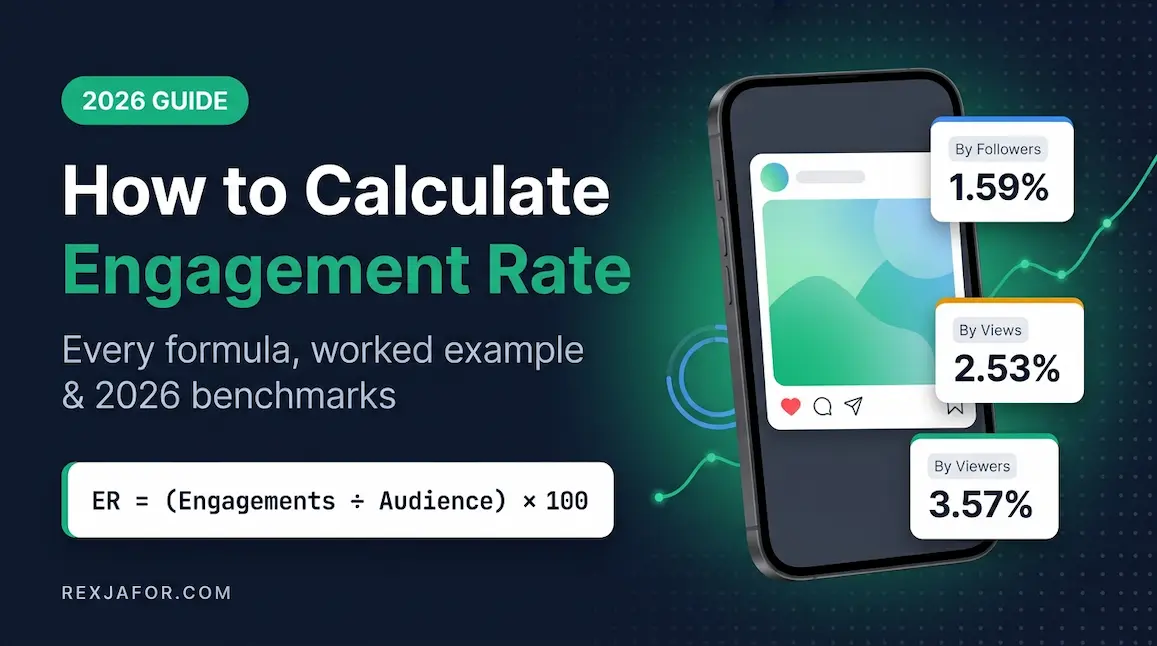
Follower count tells you how big the room is. These metrics tell you whether anyone is actually talking. For formulas on reach-based rates, see how to calculate engagement rate, and for a broader set see our list of social media KPIs.
| Metric | Formula | What good looks like |
|---|---|---|
| Median first-response time | Middle value of time from message to first reply | Falling month over month; within your SLA table |
| Response rate | Messages replied to ÷ messages received × 100 | Close to 100% for questions and complaints |
| Active-member rate | Members who posted, commented or reacted in 28 days ÷ total members × 100 | Rising steadily; watch the trend, not one month |
| Contributor ratio | Members who created a post or answered a question ÷ active members × 100 | More contributors each month = the ladder is working |
| Member-to-member answers | Questions answered by members ÷ total questions × 100 | Rising share means a real support community |
| Sentiment | Positive ÷ (positive + negative) mentions × 100 | Stable or improving; spikes of negative = investigate. Try social listening tools |
| Advocate mentions | Unprompted recommendations or tags per month | Growing — this is your fan count |
Community management tools in 2026
Start with free native tools. Buy software only when volume forces you to.
| Need | Free or native option | When to upgrade |
|---|---|---|
| Unified inbox for Facebook and Instagram | Meta Business Suite inbox | When several people share one inbox; see our Meta Business Suite tutorial |
| Group moderation | Admin Assist, member questions, keyword alerts | Rarely needed for groups under a few thousand active members |
| Automated FAQ replies | Messenger saved replies and instant replies | When the same questions arrive hundreds of times a day; see our ManyChat tutorial |
| Listening and sentiment | Manual keyword searches and notifications | When you need brand mentions across platforms and news |
| Multi-platform publishing | Meta Business Suite planner | When you manage several brands; compare Buffer vs Hootsuite |
Important limitation
Cloud schedulers such as Buffer, Hootsuite and Later cannot post into Facebook Groups — Meta removed that API permission in April 2024, and it has not returned. Group posts and replies still have to come from a person, which is one reason group community management remains a human job.
Community management in Bangladesh: what is different
Almost every ranking guide is written for the US market. Here is what changes when your community is in Bangladesh.
Facebook and Messenger are the whole market
DataReportal's Digital 2026 report puts Facebook's ad reach in Bangladesh at 64.0 million, Messenger at 35.0 million, TikTok at 56.2 million adults, YouTube at 49.8 million and Instagram at 9.15 million. Social users here are young (the median age is 26) and skew male (63.1% of social media user identities). If your community strategy does not start with Facebook comments, Groups and Messenger, it misses most of the country.
The inbox is the shop counter
For f-commerce sellers, comments like "price?" and "inbox" are purchase intent, not noise. Every unanswered one is a lost sale. Reply publicly with a short helpful answer, then continue in the DM. Our guide to f-commerce in Bangladesh covers the sales side.
Scam protection is part of the job
Impersonators copy a brand's name and profile photo, then reply to customers asking for advance payment or a bKash or Nagad OTP. Pin a warning, reply to every impersonator comment with the scam template above, and report the fake account. Protecting members is one of the fastest ways to earn trust.
Rumour moderation now carries legal weight
The interim government's 2025 cyber ordinance was passed into law by the new parliament in April 2026. As of late September 2026, a further draft amendment is under public debate. It proposes a new Section 26A that would criminalise spreading "rumours" and disinformation online, with up to 10 years' imprisonment and a fine of up to Tk 40 lakh. Rights groups and opposition MPs have criticised the draft, and it has not been passed at the time of writing.
Whatever happens to the draft, the practical advice for admins is the same: require sources for news-style posts, hide unverified claims about real people pending review, keep a moderation log, and never post or re-share defamatory content yourself. This is general guidance, not legal advice — consult a lawyer for your situation.
Peak times differ
Friday and evening habits shape when your members are online. Use your own Page insights and our research on the best times to post on social media in Bangladesh to schedule community rituals and staff replies.
What other guides get wrong
We reviewed the pages currently ranking for "community management". Several contain outdated or inaccurate claims. Here is the record, corrected.
| Claim in a ranking guide | What is actually true in 2026 |
|---|---|
| The community framework is the "SPACEI" model, ending in Internal engagement | The CMX framework is SPACES. The final S stands for Success (helping customers get value and stay). Internal employee communities are real, but they are not part of that model. |
| Presents 2020 community-industry survey figures as current proof | Those numbers are six years old. The current benchmark is The Community Roundtable's State of Community Management 2026, which finds engagement getting harder and ROI measurement still a pain point. |
| Community managers should never automate responses | Sprout Social's August 2026 survey found consumers broadly comfortable with AI chatbots handling first-line questions. Automate FAQs and triage; keep complaints, crises and judgement calls human. |
| "Social media has increased eight times since 2015" | No source is given, and it does not match published data. The Digital 2015 report by We Are Social counted about 2.08 billion active social media accounts in early 2015; DataReportal counted 5.79 billion social media user identities in April 2026 — under three times, not eight. |
| A community manager should act "as an average user" or present themselves as a user | Posing as an ordinary customer without disclosing your brand role is deceptive and can breach Meta's rules on inauthentic behaviour. Always engage openly as the brand or as a named team member. |
| Social media managers pursue short-term conversions; community managers pursue long-term goals | An oversimplification. Both roles share retention and revenue goals, and in most small businesses one person does both jobs. |
Community manager skills, certification and career
The job rewards people skills first. The core skills are clear writing, empathy under pressure, conflict resolution, sound judgement about what to remove and what to leave, basic analytics, and knowledge of platform policies.
The most recognised credential is Meta's. The Meta Community Management Professional Certificate on Coursera was refreshed in April 2026. It is a four-course, beginner-level programme that takes about four months at 10 hours a week and covers engagement, moderation and conflict resolution, data-driven community management, and growth. It prepares you for the separate Meta Certified Community Management exam (600-101), a 120-minute online test. To earn the badge, you must pass the exam and acknowledge adherence to Meta's Community Standards. Check Meta's certification page for the current exam fee before you register.
For pay, US Glassdoor data from June 2026 puts the median community manager salary at about $66,671. Bangladeshi rates are very different; see our breakdown of social media manager salary in Bangladesh and our step-by-step guide on how to become a social media manager.
Mistakes that kill communities
- Deleting fair criticism. People screenshot. A deleted complaint becomes a bigger story than the original.
- Copy-paste replies. Identical replies to 50 comments read as a bot and signal that nobody is listening.
- Launching a group with no rituals. An empty group with no weekly rhythm dies within a month.
- Inconsistent moderation. Strict one week and absent the next makes members lose trust in fairness.
- Ignoring the inbox on weekends. Complaints do not wait for Sunday; set at least a daily check.
- Measuring followers instead of conversations. A big, silent audience is not a community.
- No crisis plan. Decide who can post, who approves, and what gets said before anything goes wrong.
Frequently asked questions about community management
What is community management in simple words?
It is the daily work of talking with the people who follow a brand — replying, answering questions, setting rules, removing spam and rewarding loyal members — so that followers become a connected group of fans.
What does a community manager do every day?
A typical day includes checking comments and inboxes, replying within target times, moderating groups, posting engagement prompts, flagging product feedback to the team, watching for early signs of a crisis and reporting on metrics such as response time and active members.
Is community management the same as social media management?
No. Social media management focuses on planning and publishing content. Community management focuses on the conversation and relationships that follow. In small businesses one person often does both.
How fast should a brand reply on social media in 2026?
Aim for under an hour on public complaints, one to two hours on product questions during business hours, and within 24 hours on everything else. In Sprout Social's August 2026 survey, 68% of consumers expected a reply within 24 hours.
Should I build a Facebook Page or a Facebook Group?
Use a Page for public presence and customer questions, and add a Group when you want members to talk to each other, for example for support, learning or hobby communities. Many brands run both, with the Page as the front door and the Group as the clubhouse.
Can AI do community management?
AI can draft replies, answer frequent questions, sort messages and flag risky comments. Judgement, empathy, conflict resolution and crisis handling still need a person. Review AI replies before they go out.
Is there a certification for community managers?
Yes. Meta offers the Community Management Professional Certificate on Coursera, which prepares you for the Meta Certified Community Management exam (600-101). Passing the exam earns a verifiable badge.
How do I measure community management success?
Track median first-response time, response rate, active-member rate, contributor ratio, member-to-member answers, sentiment and unprompted advocate mentions. Watch trends month over month rather than single numbers.
Final thoughts: build fans, not follower counts
Followers are rented attention. Fans are an asset that compounds: they answer questions for you, defend you in a crisis and bring their friends. You get them by replying fast and like a human, setting fair rules, running rituals people return for, and deliberately moving members up the ladder. Start with one home base, one weekly ritual and one response-time target this week — then measure and build from there.