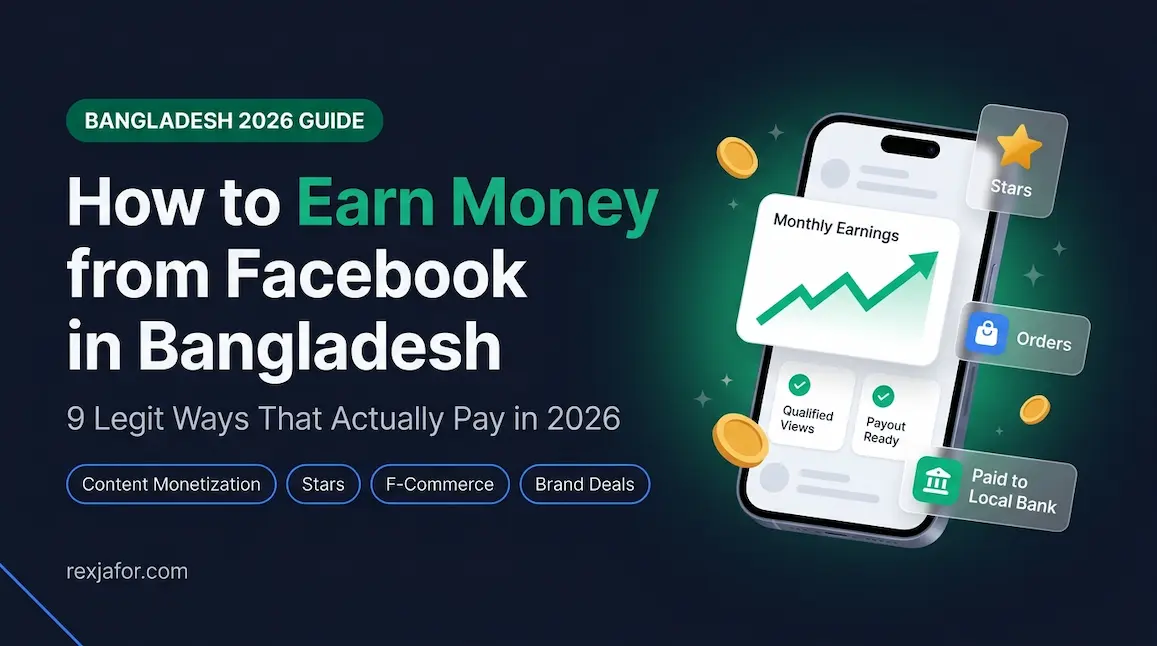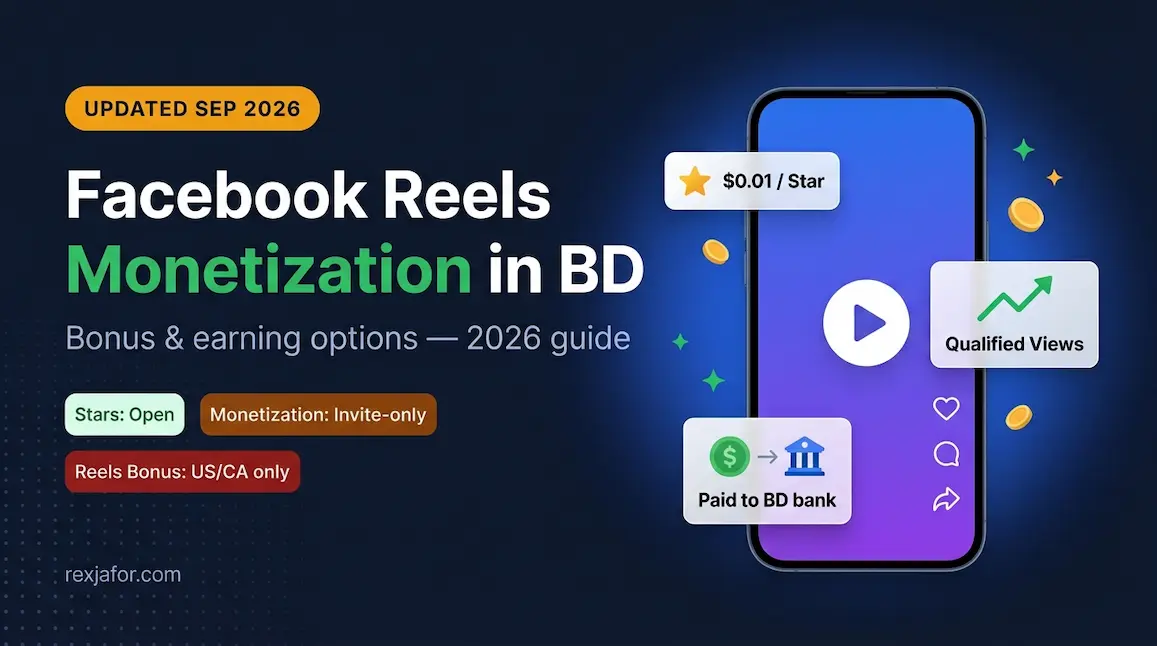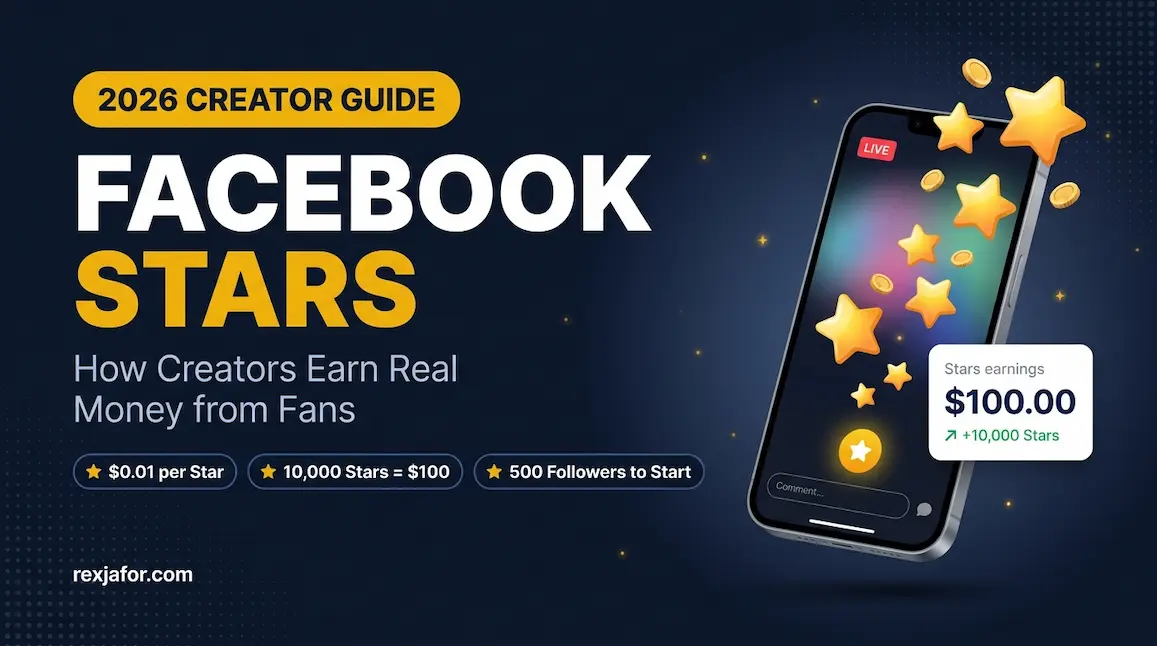
Facebook marketing is no longer just about "posting and praying." In 2026, it has transformed into a sophisticated, AI-driven ecosystem that blends social interaction, search discovery, and seamless commerce. With over 3 billion monthly active users globally, Facebook remains the undisputed heavyweight of the digital marketing world. Whether you are a local merchant in Bangladesh or a global B2B enterprise, mastering Facebook marketing is essential for building brand equity, generating high-quality leads, and driving direct revenue.
This comprehensive guide will walk you through every facet of modern Facebook marketing—from setting up a high-converting infrastructure to leveraging the latest Meta AI advertising tools. We will explore how to navigate the "lo-fi" content revolution, optimize for social search, and build automated conversational funnels that close sales while you sleep.
1. The Evolution of Facebook Marketing: From Social Network to Commerce Ecosystem
To understand where Facebook marketing is today, we must look at how far it has come. A decade ago, Facebook was primarily a platform for connecting with friends and family. Brands were guests in the feed, often relying on organic reach that seemed limitless. However, as the platform matured, the "pay-to-play" era began, and the algorithm shifted to prioritize meaningful social interactions.
Fast forward to 2026, and the landscape has shifted again. We are now in the era of Agentic Commerce and AI-Curated Discovery. Facebook is no longer just a social network; it is a personalized discovery engine. Users don't just go to Facebook to see what their friends are doing; they go there to discover new products, learn new skills, and interact with AI-powered brand assistants.
The integration of Meta AI across the platform has changed the fundamental rules of engagement. Targeting is no longer about manually selecting interests; it's about providing the AI with high-quality creative assets and letting the machine find the right audience. This shift requires marketers to move away from technical "hacking" and back toward fundamental marketing principles: creative strategy, psychological triggers, and customer experience.
2. Why Facebook Marketing is Mandatory in 2026
Despite the rise of newer platforms like TikTok or specialized networks like LinkedIn, Facebook's dominance remains unshaken for several key reasons:
The Power of Scale and Diversity
Facebook's user base is unparalleled in its diversity. It spans every demographic, from Gen Z to Baby Boomers, and every geographic region. For businesses, this means your target audience is almost certainly active on the platform. In markets like Bangladesh, Facebook commands over 71% of the social media market share, serving as the primary internet gateway for millions of users.
The Interconnected Meta Ecosystem
Facebook marketing doesn't exist in a vacuum. It is deeply integrated with Instagram, WhatsApp, and Messenger. A single campaign can reach users across multiple touchpoints, creating a cohesive brand journey. The ability to run an ad on Facebook that leads directly to a WhatsApp conversation is a game-changer for conversational commerce, particularly in emerging markets.
Advanced AI Capabilities
Meta has invested billions into its AI infrastructure. The Advantage+ suite of tools allows for automated campaign creation, creative optimization, and precision targeting that was previously impossible. This levels the playing field, allowing small businesses to compete with global brands by leveraging the same powerful algorithms.
| Feature | Impact on Marketing ROI |
|---|---|
| Meta AI Targeting | Reduces wasted ad spend by finding high-intent buyers automatically. |
| Advantage+ Creative | Automatically tests and optimizes visual elements for better engagement. |
| Conversational AI | Provides 24/7 customer support and lead qualification via Messenger. |
| Reels Algorithm | Offers massive organic reach potential for vertical video content. |
3. The Core Pillars of a Modern Facebook Strategy
A successful Facebook marketing strategy in 2026 rests on four foundational pillars: Infrastructure, Content, Community, and SEO.
Pillar 1: Infrastructure and The Meta Business Suite
Your Facebook Page is no longer just a profile; it is your digital storefront. Optimizing this infrastructure is the first step toward success.
- Meta Business Suite: This is your command center. Use it to schedule posts, manage messages across Facebook and Instagram, and access deep analytics.
- Verification and Trust: In an era of AI-generated content and deepfakes, trust is the ultimate currency. Securing a "Meta Verified" badge and completing Business Manager verification is essential for brand protection and ad account stability.
- The Shop Integration: If you sell physical products, integrating a Facebook Shop allows for a frictionless checkout experience. In 2026, "on-platform" shopping is preferred by users who want to avoid external site load times.
Pillar 2: The "Lo-Fi" Content Revolution
The days of over-produced, high-budget commercial videos are fading. In 2026, authenticity wins. Users crave "lo-fi" content—videos that look like they were filmed by a friend on a smartphone.
- Facebook Reels: This is currently the most powerful tool for organic growth. Focus on 9:16 vertical videos under 60 seconds. Use "hooks" in the first 3 seconds to stop the scroll.
- Stories for Retention: While Reels are for discovery, Stories are for nurturing your existing audience. Use polls, questions, and behind-the-scenes content to build a deeper connection.
- Long-form Video: Don't ignore longer content. Educational videos or "vlog-style" updates can build significant authority, especially when optimized for the "Watch" tab.
Pillar 3: Community-Led Growth
Facebook Groups have seen a massive resurgence. As the main feed becomes more algorithmic, users are retreating into private or semi-private communities. Brands that build and nurture their own Groups can enjoy organic reach that is 10x higher than a standard Page post.
- Advocacy: Turn your best customers into brand advocates within a dedicated group.
- Feedback Loops: Use your community to test new product ideas or gather feedback on existing services.
Pillar 4: Facebook SEO (Social Search Optimization)
Facebook is increasingly being used as a search engine. Users search for "best cafe in Dhaka" or "sustainable fashion brands" directly within the app.
- Keyword Integration: Use your primary keyword—facebook marketing—and related terms in your Page title, "About" section, and post captions.
- Alt Text: Manually edit the alt text of your images to include descriptive keywords. This helps the AI understand your content and improves accessibility.
- Vanity URLs: Ensure your Page URL is clean and includes your brand name or primary service.
4. Meta Ads Advantage+ Suite: The AI Advertising Revolution
In 2026, the technical side of running Facebook ads has become significantly simpler, while the strategic side has become more complex. The Meta Ads Advantage+ suite has automated many of the tasks that used to require a specialized media buyer.
Understanding the AI Algorithm
The Meta algorithm is now a "Black Box" that performs best when given more freedom. The old strategy of hyper-segmenting audiences (e.g., "Men, 25-34, interested in Golf and Luxury Watches") is largely obsolete. Instead, the modern approach is Broad Targeting. By giving the AI a broad audience and high-quality creative, the algorithm uses "creative-led targeting" to find the people most likely to convert based on how they interact with the ad itself.
The Power of Advantage+ Shopping Campaigns (ASC)
For e-commerce brands, ASC is the gold standard. These campaigns use machine learning to identify your best customers across the entire Meta ecosystem. They require minimal manual input, automatically testing different combinations of creative and placements to find the lowest cost per acquisition.
Creative Diversification: The New Targeting
Since the algorithm uses your creative to find your audience, you must provide a diverse range of assets. A winning ad account in 2026 typically includes:
- User-Generated Content (UGC): Real people talking about your product. This builds immediate trust.
- Problem/Solution Statics: Clean graphics that clearly state the pain point your product solves.
- Educational Carousels: Multi-slide posts that teach the user something valuable while subtly introducing your brand.
- Testimonial Mashups: A compilation of short clips from happy customers.
Budgeting and Scaling Strategies
- The 80/20 Rule: Allocate 80% of your budget to "Proven Winners" (ads that have already shown a positive ROAS) and 20% to "Testing" new hooks, angles, and formats.
- Horizontal Scaling: Instead of just increasing the budget of one ad set, scale by introducing new creative variations into the winning campaign.
- CBO (Campaign Budget Optimization): Let Meta distribute your budget across ad sets in real-time based on performance.
5. Conversational Commerce & AI Shopping Assistants
The biggest shift in Facebook marketing over the last two years has been the move toward "Conversational Commerce." In many regions, including South Asia and Latin America, the traditional website checkout is being replaced by direct messaging funnels.
Click-to-WhatsApp and Click-to-Messenger Ads
These ads don't send users to a landing page; they open a chat window. This reduces friction and allows for a more personalized sales experience. For high-ticket items or services that require consultation, this is the most effective way to generate leads.
The Role of AI Agents
In 2026, you don't need a massive customer support team to handle these chats. AI Shopping Assistants can now:
- Answer frequently asked questions about pricing, shipping, and availability.
- Recommend products based on the user's preferences.
- Qualify leads by asking specific questions before handing the conversation off to a human agent.
- Process payments directly within the chat interface.
Response Velocity: The Make-or-Break Metric
Data shows that if a brand responds to a message within 5 minutes, the likelihood of a conversion increases by over 400%. Automated AI responses ensure that your brand is "always on," even at 3:00 AM.
6. Data Privacy, Security, and Ethics in 2026
As Facebook marketing becomes more sophisticated, so do the challenges surrounding privacy and security.
Navigating a Post-Cookie World
With the death of third-party cookies and the rise of privacy regulations like GDPR and CCPA, tracking user behavior has become more difficult. Meta's solution is the Conversions API (CAPI). By creating a direct link between your server and Meta's server, CAPI allows you to track conversions more accurately while respecting user privacy.
Asset Protection and Security
Your Facebook Business Manager is one of your most valuable business assets. In 2026, security is not optional:
- Two-Factor Authentication (2FA): Every person with access to your Business Manager must have 2FA enabled via an authenticator app.
- Role-Based Access: Never give "Admin" access to anyone who doesn't absolutely need it. Use "Task Access" for agencies and employees.
- Regular Audits: Monthly audits of who has access to your Page, Ad Account, and Pixel are essential to prevent hijacking.
7. Measuring Success: Beyond Vanity Metrics
If you want to master facebook marketing, you must stop looking at "Likes" and "Shares" as primary indicators of success. In 2026, we focus on performance-based KPIs.
The New KPI Hierarchy
- Return on Ad Spend (ROAS): The ultimate measure of profitability.
- Cost Per Qualified Lead (CPQL): Not just any lead, but those that meet your specific criteria.
- Hook Rate (3-Second View / Impressions): Measures how well your creative stops the scroll.
- Hold Rate (ThruPlays / 3-Second Views): Measures how well your content keeps people watching.
- Conversion Rate (CVR): The percentage of people who take the desired action after clicking your ad.
Attribution Modeling
Because a user might see your ad on Facebook, then search for you on Google, and finally buy through a WhatsApp message, attribution is complex. Using a "Multi-Touch Attribution" model or a "Marketing Mix Model" (MMM) helps you understand the true value of each channel in your marketing mix.
8. B2B vs. B2C: Tailoring Your Facebook Marketing Strategy
While the core tools of Facebook are the same, the strategy for a B2B (Business-to-Business) company differs significantly from a B2C (Business-to-Consumer) brand.
Facebook Marketing for B2C Brands
B2C marketing on Facebook is all about emotion, speed, and visual appeal.
- Impulse Buys: Use "Flash Sales" and "Limited Time Offers" to drive immediate action.
- Influencer Collaborations: Partner with micro-influencers to create authentic UGC that resonates with specific niche audiences.
- Visual Storytelling: Use high-quality imagery and fast-paced Reels to showcase the lifestyle benefits of your product.
- Retargeting: Use Dynamic Product Ads (DPA) to show users the exact items they left in their shopping cart.
Facebook Marketing for B2B Brands
B2B marketing is about building authority, trust, and long-term relationships.
- Lead Magnets: Offer high-value resources like Whitepapers, Case Studies, or Webinars in exchange for contact information.
- Thought Leadership: Use long-form posts and "Live" sessions to establish your executives as experts in the industry.
- Account-Based Marketing (ABM): Use custom audiences to target specific employees at your target companies.
- Messenger for Consultation: Use automated flows to book discovery calls or demos directly within the app.
9. Regional Spotlight: Facebook Marketing in Bangladesh
As highlighted in the initial overview, Bangladesh represents a unique and high-growth market for Facebook marketers. With over 74 million active users, it is one of Meta's most vibrant ecosystems in South Asia.
The F-Commerce Phenomenon
In Bangladesh, "F-Commerce" (Facebook Commerce) is often more significant than traditional e-commerce websites. Many successful businesses operate entirely through a Facebook Page and a WhatsApp number.
- Cash on Delivery (COD): The dominant payment method. Your marketing should clearly communicate trust and reliable delivery.
- Local Language Content: While English is widely understood, content in Bangla (both formal and "Romanized" Bangla) often sees higher engagement and conversion rates.
- Mobile-First Everything: Nearly 100% of users in Bangladesh access Facebook via mobile devices. Your creative and landing pages must be perfectly optimized for small screens and potentially slower data connections.
Dominant Verticals in the Local Market
- Fashion & Lifestyle: High demand for local traditional wear and global fashion trends.
- Gadgets & Tech: A massive market for mobile accessories and consumer electronics.
- EdTech: One of the fastest-growing sectors, using Facebook to reach students and parents with educational content.
- MFS (Mobile Financial Services): Promoting services like bKash and Nagad through educational video content.
10. A Step-by-Step Guide to Implementing Your 2026 Strategy
If you are starting from scratch or looking to overhaul your current efforts, follow this roadmap:
Phase 1: The Setup (Week 1)
- Audit Your Assets: Ensure your Page, Ad Account, and Business Manager are properly linked and secured with 2FA.
- Install the Meta Pixel & CAPI: Don't spend a dollar on ads until your tracking is in place.
- Optimize Your Page SEO: Update your "About" section with keywords like facebook marketing and ensure your CTA button is correctly set.
Phase 2: Content Foundations (Weeks 2-3)
- Create a Content Calendar: Aim for 3 Reels, 5 Stories, and 2 Static/Carousel posts per week.
- Batch Produce "Lo-Fi" Video: Spend one day a week filming short clips on your phone.
- Set Up Automated Responses: Configure basic Messenger/WhatsApp automation for common queries.
Phase 3: Launching Ads (Week 4)
- Start with a Testing Campaign: Use an Advantage+ Shopping or Lead Gen campaign with 3-5 different creative variations.
- Analyze the Data: After 7 days, identify which creative has the highest "Hook Rate."
- Scale the Winners: Move your best-performing creative into a dedicated scaling campaign with a higher budget.
11. The Future of Facebook Marketing: Beyond 2026
What lies ahead for the platform? As we look toward 2027 and beyond, several trends are emerging:
- Hyper-Personalized AI Video: Imagine an ad that automatically changes its background, music, and even the actor's language based on the specific person viewing it. This technology is already in early stages.
- AR/VR Shopping: With the continued development of Meta Quest and augmented reality glasses, "trying on" products in a virtual space before buying them on Facebook will become a standard feature.
- The Rise of Niche Communities: As the "Global Town Square" becomes noisier, the value of small, highly-engaged niche groups will only increase.
12. Common Facebook Marketing Mistakes to Avoid
Even seasoned marketers fall into these traps. Avoiding them will save you thousands in wasted ad spend and lost opportunities.
Mistake 1: Over-Editing Your Content
In 2026, "perfect" is the enemy of "profitable." Content that looks too much like a traditional TV commercial is often ignored by users who are looking for authentic social interaction. Focus on clarity and value rather than high-end production.
Mistake 2: Ignoring the "Learning Phase"
When you launch a new ad campaign, Meta's AI needs time to gather data. This is called the "Learning Phase." Many marketers make the mistake of turning off an ad after only 24 hours because they haven't seen a sale yet. Give the algorithm at least 5-7 days (or 50 conversions) to optimize.
Mistake 3: Focusing on the Wrong Metrics
If your goal is sales, don't get distracted by a post that got 1,000 likes but zero clicks. Always optimize for your "North Star" metric—usually ROAS or Cost Per Lead.
Mistake 4: Neglecting the Post-Click Experience
You can have the best Facebook ad in the world, but if your landing page is slow, confusing, or not mobile-friendly, you will lose the sale. Ensure the transition from Facebook to your website or chat is seamless.
13. Frequently Asked Questions (FAQ)
- Is Facebook marketing still effective in 2026?
- Absolutely. While new platforms emerge, Facebook remains the only platform with the scale, demographic diversity, and advanced AI targeting necessary for consistent business growth. It currently serves over 3 billion monthly active users, making it the largest audience pool in history.
- How much budget do I need to start Facebook ads?
- You can start testing with as little as $5 to $10 per day. However, for the AI to optimize effectively, we recommend a daily budget that is at least 5x your target Cost Per Acquisition (CPA). For example, if you want to acquire a lead for $2, aim for a $10/day budget.
- Should I use automated chatbots for Messenger marketing?
- Yes. In 2026, automated AI agents are essential for handling the high volume of queries generated by Facebook ads. They ensure a 0-second response time, qualify leads, and can even close sales, allowing your human team to focus on complex customer needs.
- What is the difference between "Boosting a Post" and using "Ads Manager"?
- Boosting a post is a simplified way to get more engagement on a specific piece of content. Ads Manager is a professional-grade tool that offers full control over objectives, targeting, creative A/B testing, and advanced reporting. For any serious business goal, Ads Manager is the superior choice.
- How do I recover a hacked or restricted Facebook Page?
- If your asset is compromised, immediately use the Meta Business Help Center to report the issue. Ensure you have your business verification documents ready. The best defense is a good offense: always use 2FA and never click on suspicious links in your inbox claiming to be from "Meta Security."
- Does Facebook SEO really matter?
- Yes. As more users use the Facebook search bar to find products and services, optimizing your Page and posts for keywords becomes a significant source of free, high-intent traffic.
- How often should I post on my Facebook Page?
- Consistency is more important than frequency. It is better to post 3 times a week with high-quality, engaging content than to post every day with low-value filler. In 2026, the algorithm prioritizes content that generates meaningful interactions.
- Can I run Facebook ads without a website?
- Yes. You can use "Lead Forms" within Facebook or "Click-to-Message" ads that lead to Messenger, WhatsApp, or Instagram Direct. This is a highly effective strategy for service-based businesses and F-Commerce brands.