Choosing a blogging platform feels like a small decision on day one. It isn't. It is the decision that quietly determines whether you can ever run ads, whether you actually own your audience, whether you can move your content somewhere else in three years, and — if you are publishing from Bangladesh — whether the platform's "monetisation features" can legally pay you at all.
That last part is where almost every "best blogging platforms" guide falls apart. They are written for readers in the US, UK, or EU, where every payment rail just works. Read those guides from Dhaka and you will happily build a paid newsletter on a platform that cannot deposit a single taka into your bank account.
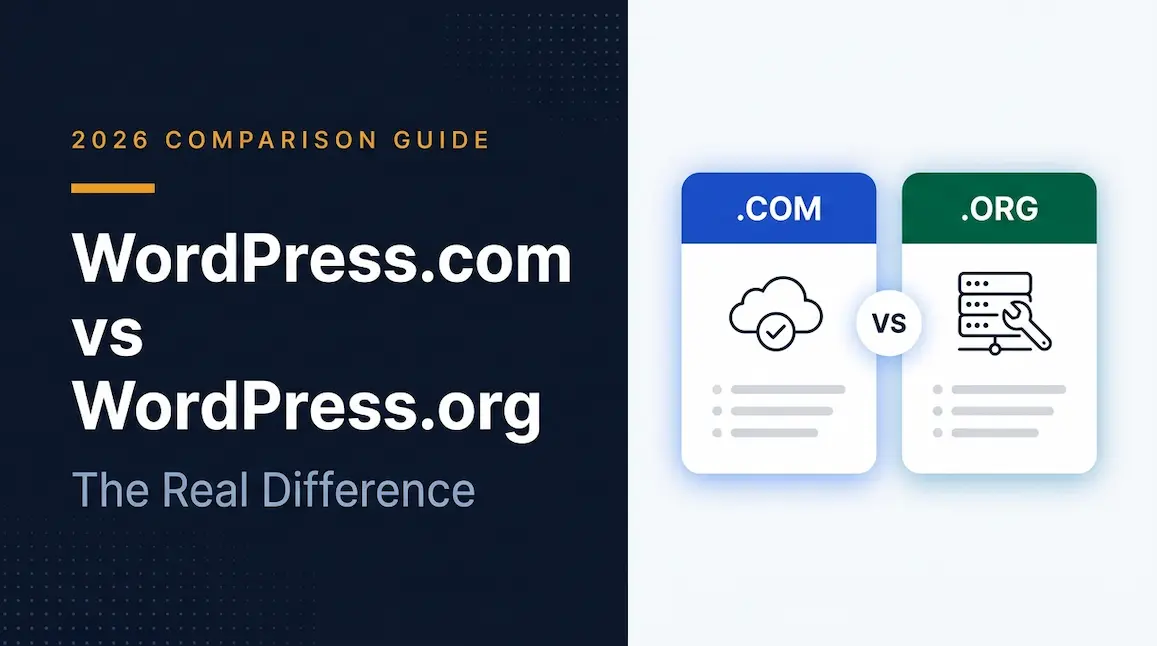
This comparison fixes that. I tested and priced WordPress.org, WordPress.com, Blogger, and Ghost against the things that actually decide a blog's fate — cost in BDT, payment method, monetisation eligibility from Bangladesh, SEO control, and exit path — plus honest short verdicts on Medium, Substack, Wix, and Squarespace.
KEY TAKEAWAYS
- WordPress.org wins for anyone serious about income. It is the only platform on this list where you own the site, keep 100% of ad revenue, and can pay your hosting bill with bKash or Nagad.
- WordPress.com changed massively in April 2026. Plugins are no longer locked behind the $25/month Business plan — every paid plan from $4/month now installs from the 50,000+ plugin directory. Most comparison articles you will read today have not been updated for this.
- Blogger is still the best free on-ramp in Bangladesh — free hosting, free SSL, custom domain support, and native AdSense integration as a Google host partner. It is limited, but it is honest about being free.
- Ghost is superb software with a Bangladesh problem. Its paid-membership engine runs on Stripe, and Stripe does not support Bangladesh-based merchants. You can publish on Ghost from Dhaka; you cannot collect subscriptions on it without a foreign company.
- Twelve-month reality check: a self-hosted WordPress blog on a local BDIX host runs roughly Tk 3,600–6,000/year. Ghost(Pro) Publisher runs roughly Tk 43,000/year — and requires an international card.
- AdSense is the monetisation route that actually works from Bangladesh. It pays by wire transfer to local banks at a $100 threshold, which is why platform choice should be judged on ad-friendliness first.
What is in this comparison
- The 30-second verdict
- The payment trap nobody warns Bangladeshi bloggers about
- How I evaluated these platforms
- 1. WordPress.org — best overall
- 2. WordPress.com — best managed option
- 3. Blogger — best free starting point
- 4. Ghost — best publishing experience
- Medium, Substack, Wix & Squarespace: short verdicts
- Full feature comparison
- Real 12-month cost in BDT
- Monetisation reality check for Bangladesh
- Which platform should you choose?
- Notes for Bangla-language blogs
- Can you move later? Exit paths compared
- Five mistakes that cost people years
- Frequently asked questions
The 30-second verdict
If you only read one section, read this one.
| Platform | Best for | Realistic yearly cost | Payable from BD? |
|---|---|---|---|
| WordPress.org | Anyone who wants ad income, full control, and an asset they own | Tk 3,600–6,000 | Yes — bKash / Nagad / local card |
| WordPress.com | People who want WordPress without touching a server | Tk 6,000–12,500 | Needs international card / PayPal |
| Blogger | Zero-budget beginners testing whether they will stick with writing | Tk 0–1,500 | Yes — free; domain via local registrar |
| Ghost | Newsletter-first publishers who already have a Stripe-eligible entity | Tk 22,500–43,500 | Partly — payouts blocked without foreign entity |
Short answer for most readers: start free on Blogger if you are not yet sure you will keep writing. The moment you publish your tenth post and still enjoy it, move to self-hosted WordPress on a local host. That path costs almost nothing to test and leads somewhere you can actually monetise.
The payment trap nobody warns Bangladeshi bloggers about
Here is the single most important fact in this entire article, and you will not find it in any of the guides ranking above this one.
Stripe does not support Bangladesh as a merchant country. As of 2026 Stripe directly supports roughly 46 countries, and Bangladesh is not among them — a business registered in Bangladesh cannot open a Stripe account. The restriction is on where the merchant is based, not on who can pay, so Bangladeshi readers can still buy things through Stripe checkouts with a Visa or Mastercard. What you cannot do is hold the account and receive the money.
Why does this matter for a blogging platform comparison? Because the paid-subscription features that every competitor article praises are built directly on Stripe:
BLOCKED FROM BANGLADESH WITHOUT A FOREIGN ENTITY
- Ghost paid memberships — Ghost's subscription billing runs on Stripe. The software installs fine; the payment connection does not.
- Substack paid subscriptions — Substack states plainly that paid subscriptions require a Stripe account, and points publishers to Stripe's supported-country list. Free publications work from anywhere; paid ones do not.
- Patreon, Ko-fi and Buy Me a Coffee tips — all three sit on the same rail and exclude most of South Asia.
The usual workaround is forming a US LLC with an EIN and applying to Stripe as a US business. It is legal and thousands of Bangladeshi founders do it, but budget realistically: setup runs into the hundreds of dollars, annual compliance costs more, and you take on US tax filing on top of your Bangladeshi obligations. That is a reasonable move for someone already earning. It is an absurd first step for someone who has not published post number one.
The good news, and a correction to a very common myth: the Medium Partner Program does now list Bangladesh as an eligible country. Medium pays through Stripe Express, which supports payouts to considerably more countries than full merchant accounts do. So "Medium can't pay Bangladeshis" — advice you will still see repeated in Facebook groups — is out of date.
And Google AdSense works normally from Bangladesh. It pays into local bank accounts once you cross the $100 threshold, with payments issued between the 21st and 26th of the month. This is why, for most Bangladeshi bloggers, ad-friendly platforms matter far more than subscription-friendly ones.
Keep that asymmetry in mind for the rest of this comparison. A platform's value to you depends less on its feature list than on whether its money can reach your bank.
How I evaluated these platforms
I ignored the marketing pages and scored each platform on the six things that determine whether a blog survives its third year:
- True cost of ownership over 12 months, converted to BDT at realistic card rates — not the discounted first-year sticker price.
- How you pay for it from Bangladesh. A platform you cannot subscribe to is not an option, however good it is.
- Monetisation eligibility from Bangladesh — can AdSense run on it, and can subscription revenue actually reach a local bank?
- SEO control — schema, redirects, sitemaps, canonical tags, page speed, and whether you can install an SEO plugin at all.
- Ownership and portability — who holds your content, and how painful is leaving?
- Bangla-language handling — Unicode rendering, font loading weight, and search visibility for Bangla content.
Where a fact was time-sensitive — pricing, plan limits, country eligibility — I verified it against the provider's own documentation in 2026 rather than repeating what other comparison articles claim. That turned out to matter a great deal, as the WordPress.com section below shows.
1. WordPress.org — best overall for Bangladeshi bloggers
Verdict at a glance
- Best for: anyone who intends to earn from their blog
- Cost: Tk 3,600–6,000/year on a local host, including domain
- Pay with: bKash, Nagad, Rocket, local bank card
- AdSense: fully supported, no restrictions
- Skill needed: low to moderate — a weekend to get comfortable
WordPress.org is the free, open-source software you install on your own hosting. It is not a company you subscribe to; it is a piece of software you run. That distinction is the whole reason it wins here.
For a Bangladeshi blogger the practical advantages stack up fast. You buy hosting from a local provider and pay with bKash — no international card, no dollar endorsement, no bank branch visit. Shared hosting in Bangladesh generally runs between Tk 100 and Tk 500 per month, with many providers accepting bKash, Nagad and bank transfer directly. A .com domain typically costs Tk 800–1,500 per year from a local registrar. Your entire first year can cost less than a mid-range dinner out in Dhanmondi.
You also get something no hosted platform will give you: complete revenue ownership. Run AdSense, affiliate links, sponsored posts, digital products, and a Bangladeshi payment gateway like SSLCommerz or aamarPay side by side, with no platform taking a cut and no plan upgrade required to unlock any of it.
Why BDIX hosting matters more than you think
This is a genuinely Bangladesh-specific advantage that global comparison articles never mention. BDIX is the Bangladesh Internet Exchange. Hosting connected to BDIX serves pages to visitors inside Bangladesh over local routes rather than bouncing traffic through Singapore or the US. If most of your readers are in Bangladesh, that translates to a visibly faster site — and page speed feeds directly into search rankings and bounce rate.
The trade-off is real, though. If you are writing in English for a global audience, a well-run international host with servers in Singapore usually beats a small local host on uptime, support depth, and raw hardware. Pick the server location that matches your readers, not your own location.
| Strengths | Weaknesses |
|---|---|
| Free software, and you own the site outright | You are responsible for updates, backups and security |
| Payable in BDT via bKash on local hosts | Cheap local hosts vary wildly in quality — research required |
| Best-in-class SEO control via Rank Math or Yoast | Steeper learning curve than Blogger or Ghost |
| Every monetisation route available, no revenue share | Plugin bloat can wreck performance if you are careless |
| Huge Bangla-language tutorial community on YouTube | Renewal pricing is often 30–60% above the intro rate |
Watch the renewal price. Local hosts advertise first-year rates and quietly renew 30–60% higher. Before you buy, ask support for the renewal figure in writing. A Tk 1,200 first year that renews at Tk 3,000 is a Tk 3,000 host with a discount, not a Tk 1,200 host.
2. WordPress.com — the managed option that just got far better
Verdict at a glance
- Best for: writers who want WordPress without server maintenance
- Cost: from $4/month billed annually (~Tk 6,000/year)
- Pay with: international card or PayPal — no bKash
- AdSense: possible via plugins on paid plans; WordAds needs Premium
- Skill needed: low
WordPress.com is Automattic's hosted service running the same WordPress software. They handle servers, updates, SSL and backups; you write.
Now the part that makes most currently-ranking comparison articles obsolete. On 2 April 2026, WordPress.com opened plugin access to every paid plan. Personal, Premium, Business and Commerce subscribers can now install from the 50,000+ plugin directory, along with Global Styles, custom font uploads and CSS customisation. For years, plugins were locked to the Business plan at $25/month — which is exactly what the guides currently ranking on page one still tell you.
Why this is a big deal: installing Rank Math or Yoast on WordPress.com used to cost $300/year. It now costs $48/year on the Personal plan. That collapses the price gap between managed WordPress.com and self-hosted WordPress for a simple blog.
If you read a comparison article that says "you need the Business plan for plugins," check its publication date. It is describing a product that no longer exists.
Which plan you actually need
| Plan | Annual price | ≈ BDT/year | Worth it when |
|---|---|---|---|
| Free | $0 | Tk 0 | Never, for a real project — subdomain plus their ads on your site |
| Personal | $4/mo | ≈ Tk 6,000 | The sweet spot post-April 2026 — custom domain, no ads, plugins |
| Premium | $8/mo | ≈ Tk 12,000 | You want WordAds display advertising and live chat support |
| Business | $25/mo | ≈ Tk 37,500 | You need real-time backups, staging and SFTP/SSH access |
BDT figures use an effective card rate of roughly Tk 125/$1. The mid-market USD/BDT rate sat near Tk 123 in late 2026; banks typically add a margin on top, so budget slightly above the spot rate.
The honest catch for Bangladeshi readers is payment. WordPress.com takes international cards and PayPal. If you do not already have a dual-currency card with an active dollar endorsement from your bank, this is a barrier that self-hosted WordPress on a local host simply does not have. That single fact is why WordPress.org sits above WordPress.com in this ranking despite WordPress.com being the easier product.
One meaningful gap on Personal: the plan does not include one-click backup restore. If your blog becomes a real income source, that is a risk worth the upgrade to Business — or a reason to self-host, where you control your own backup routine.
3. Blogger — still the best free starting point in Bangladesh
Verdict at a glance
- Best for: zero-budget beginners and students testing the habit
- Cost: Tk 0, or Tk 800–1,500/year if you add a custom domain
- Pay with: nothing to pay — domain purchasable locally in BDT
- AdSense: native — Blogger is a Google AdSense host partner
- Skill needed: essentially none
Most international comparison guides give Blogger two dismissive sentences and move on. That is a mistake when you are writing for a Bangladeshi audience, because Blogger solves the exact problem that stops most people here from ever starting: you need no money and no card.
Blogger is free and includes free hosting, a free SSL certificate, a free .blogspot.com subdomain, custom domain support if you want to look professional, built-in templates, and direct integration with Google Analytics and Search Console. Google handles uptime, security patching and SSL renewal. There is nothing to maintain.
The monetisation path is unusually clean too. Google identifies Blogger as an AdSense host partner, so eligible publishers can apply directly from Blogger and connect a hosted AdSense account — including on a free blogspot.com address as well as on a Blogger site connected to a custom domain. Combined with AdSense's normal wire-transfer payouts to Bangladeshi banks, that means a Blogger site can genuinely pay you without a single upfront taka.
Where Blogger runs out of road
Be clear-eyed about the ceiling. Blogger has not received meaningful feature development in years. Themes are dated, template editing means wrestling with XML, there is no plugin ecosystem, and structured data has to be hand-coded. Ad-management networks that pay better than AdSense are largely out of reach: Ezoic, for instance, has no integration path for free .blogspot.com domains at all, and only becomes an option once you connect a custom domain.
The deeper issue is ownership. Google has retired popular products before, and while Blogger shows no sign of shutting down, you are building on land you do not own. That is an acceptable risk for a hobby blog and an unacceptable one for a business.
| Strengths | Weaknesses |
|---|---|
| Genuinely free — hosting, SSL and bandwidth included | Effectively frozen product; minimal new development |
| Native AdSense host-partner integration | No plugins; customisation means editing theme XML |
| Zero maintenance — Google runs the infrastructure | Better-paying ad networks are mostly unavailable |
| Custom domain support keeps it looking professional | Dated default themes signal "amateur blog" to readers |
| Exports cleanly to WordPress when you outgrow it | You do not own the platform your business sits on |
The smart Blogger play: buy a custom domain from day one, even on Blogger. It costs Tk 800–1,500 a year, makes you look serious, keeps Ezoic and similar networks on the table, and — critically — means that when you migrate to WordPress later, your URLs and accumulated backlinks come with you. Starting on a blogspot.com address and moving later means throwing away every link you earned.
4. Ghost — beautiful software, awkward fit from Bangladesh
Verdict at a glance
- Best for: newsletter-first publishers with a Stripe-eligible entity
- Cost: Ghost(Pro) from $15/mo annually; self-hosting from ~$5/mo plus email
- Pay with: international card only
- Paid memberships from BD: blocked without a foreign company
- Skill needed: low on Ghost(Pro); high if self-hosting
Ghost is the best pure writing and publishing experience of the four. The editor is clean, the sites are fast by default, newsletters are built in rather than bolted on, and the platform takes 0% of your subscription revenue on paid plans — a genuinely writer-friendly model compared with Substack's 10% cut.
Ghost(Pro), the managed service, has four tiers. Starter runs $15/month billed annually ($18 monthly) with a 1,000-member ceiling. Publisher is $29/month annually ($35 monthly). Business sits at $199/month annually. The critical detail buried in the pricing page: the Starter tier does not support paid member subscriptions at all. If monetising through memberships is your plan, Publisher is your real starting price, not Starter.
Ghost is also open source, so self-hosting is free in licence terms. In practice it is not cheap. Ghost's newsletter feature requires Mailgun for bulk email on self-hosted installs, and Mailgun's pricing changed in December 2025 when the legacy pay-as-you-go plan was discontinued — for an active newsletter beyond a few hundred subscribers, roughly $35/month has become the practical floor. Ghost's own documentation estimates self-hosting at around $72/month once CDN, analytics, backups and email are counted, which is often more than Ghost(Pro) Starter.
THE BANGLADESH PROBLEM
Ghost's entire commercial proposition is paid memberships. That engine runs on Stripe, and Stripe does not support Bangladesh-based merchants. You can install Ghost, publish on it, and send free newsletters from Dhaka without any issue. The moment you try to switch on paid subscriptions, you hit a wall that no Ghost setting can solve.
Paying roughly Tk 43,500 a year for Ghost(Pro) Publisher — a tier whose main value over Starter is precisely the monetisation features you cannot use — is the single most expensive mistake in this comparison.
Ghost makes sense from Bangladesh in exactly two situations: you already operate through a US or UK entity with Stripe access, or you want a fast, elegant free publication and plan to monetise through AdSense-style ads and sponsorships instead of subscriptions. For the second case, though, note that Ghost is not built for display advertising the way WordPress is — you would be paying a premium for a feature set you are deliberately not using.
Medium, Substack, Wix & Squarespace: short verdicts
These come up constantly in "best blogging platforms" lists. Here is where each genuinely stands for a Bangladeshi writer.
Medium — surprisingly viable, and better than its local reputation
Bangladesh appears on Medium's Partner Program eligibility list, with payouts handled through Stripe Express and a $10 minimum threshold. That makes it one of the few subscription-style platforms that can actually pay a Bangladeshi writer. The catch is the usual one: you build no SEO asset, own no audience, and Medium can change the rules whenever it likes. Treat it as a distribution channel, not a home.
Substack — free publishing works, paid publishing does not
Substack is explicit that a free publication can be started from anywhere, but paid subscriptions require a Stripe account in a supported country. Bangladesh is not one. On top of that, Substack takes 10% of subscription revenue where it does apply. Fine for building an email list; not a monetisation plan.
Wix and Squarespace — website builders that happen to include a blog
Both are excellent at what they are designed for: visually polished business sites and portfolios. Neither is a serious content-publishing engine, both bill in USD requiring an international card, and both lock you into a proprietary system that exports poorly. If your goal is a blog that ranks and earns, you are paying builder prices for blogging features WordPress does better.
Full feature comparison
| Feature | WordPress.org | WordPress.com | Blogger | Ghost |
|---|---|---|---|---|
| You own the site | Yes, fully | Content yes, platform no | No — Google's platform | Yes if self-hosted |
| Plugins / extensions | 60,000+, unrestricted | 50,000+ on all paid plans | None | Integrations only |
| SEO plugin support | Rank Math, Yoast, any | Rank Math, Yoast from $4/mo | Manual XML editing | Solid built-in SEO |
| Display ads / AdSense | Unrestricted | Yes; WordAds needs Premium | Native host-partner integration | Possible but not the design intent |
| Paid subscriptions from BD | Via SSLCommerz / aamarPay | Stripe-dependent — blocked | Not supported | Stripe-dependent — blocked |
| Built-in newsletter | Via plugin | Yes | Basic follow-by-email only | Best in class |
| Pay with bKash / Nagad | Yes on local hosts | No | Nothing to pay | No |
| BDIX / local server option | Yes | No | No — Google CDN | Only if self-hosted locally |
| Maintenance burden | Yours | Handled | Handled | Handled on Pro |
| Export quality | Complete | Complete | Good — imports to WordPress | Good — JSON export |
Real 12-month cost in BDT
This is the table the international guides cannot write for you. Figures assume an effective card rate near Tk 125 per dollar and include a domain where one is required.
| Setup | Platform cost | Domain | Year 1 total |
|---|---|---|---|
| Blogger on free subdomain | Tk 0 | — | Tk 0 |
| Blogger + custom domain | Tk 0 | Tk 800–1,500 | Tk 800–1,500 |
| WordPress.org on local BDIX host | Tk 2,400–4,800 | Tk 1,200 | Tk 3,600–6,000 |
| WordPress.org on international host | Tk 4,500–7,500 | Often free year 1 | Tk 4,500–7,500 |
| WordPress.com Personal | Tk 6,000 | Free year 1 | Tk 6,000 |
| WordPress.com Premium | Tk 12,000 | Free year 1 | Tk 12,000 |
| Ghost(Pro) Starter | Tk 22,500 | Tk 1,200 | Tk 23,700 |
| Ghost(Pro) Publisher | Tk 43,500 | Tk 1,200 | Tk 44,700 |
Put that in perspective. A self-hosted WordPress blog on a local host costs roughly what one Ghost(Pro) Publisher month costs. If you are starting out, that difference is not a rounding error — it is eight months of runway to figure out whether anyone reads what you write.
Monetisation reality check for Bangladesh
Forget feature lists for a moment. Here is what can actually deposit money into a Bangladeshi bank account, and on which platforms.
| Revenue route | Works from BD? | Best platform for it |
|---|---|---|
| Google AdSense | Yes — wire transfer at $100 threshold | WordPress.org, then Blogger |
| Premium ad networks | Yes, once traffic qualifies | WordPress.org (custom domain required) |
| Affiliate marketing | Yes — via Payoneer or bank transfer | WordPress.org |
| Sponsored posts | Yes — invoice directly, local or foreign | Any platform with a custom domain |
| Selling digital products locally | Yes — SSLCommerz, aamarPay, bKash | WordPress.org only |
| Medium Partner Program | Yes — Bangladesh is eligible | Medium (as a side channel) |
| Paid subscriptions via Stripe | No — needs a foreign entity | Not viable for most readers |
Read that table top to bottom and the ranking in this article stops looking like an opinion. Five of the six routes that work from Bangladesh point to the same platform.
Which platform should you choose?
Find yourself in one of these five situations.
"I have no money and I am not sure I will stick with it."
Blogger, with a custom domain if you can spare Tk 1,000. Publish ten posts. If you are still enjoying it after that, you have proven something to yourself that no platform comparison can prove for you — and you can migrate with your links intact.
"I want to build a blog that earns money."
WordPress.org on a local host. Under Tk 6,000 for year one, payable with bKash, every monetisation route open, and you own the asset. This is the answer for the large majority of readers.
"I have an international card and I never want to touch a server."
WordPress.com Personal at $4/month. Since April 2026 it installs Rank Math and the rest of the plugin directory, which was the one thing that used to make this plan a dead end. Upgrade to Business only when backup restore becomes worth Tk 37,500 a year to you.
"My blog is really a newsletter, and I have a US or UK entity."
Ghost(Pro) Publisher. Skip Starter — it does not support paid memberships, so you would upgrade within weeks anyway. The 0% revenue share beats Substack's 10% cut once you are past roughly $290/month in subscription revenue.
"I write in Bangla for Bangladeshi readers."
WordPress.org on BDIX hosting. Local server routing plus full control over font loading is the combination that keeps Bangla pages fast — and Bangla content lives or dies on speed, for reasons covered in the next section.
Notes for Bangla-language blogs
Every platform in this comparison renders Unicode Bangla correctly in 2026, so that old worry is settled. The real issues are subtler.
Bangla web fonts are heavy
Bengali script fonts carry far more glyphs than Latin ones, and a full Bangla webfont can add several hundred kilobytes to every page load. On a mobile connection outside Dhaka that is the difference between a reader staying and a reader leaving. On WordPress.org you can subset the font, self-host it, and preload only the weights you use. On Blogger you are largely stuck with whatever the theme loads. This is a concrete reason to prefer self-hosted WordPress for Bangla content specifically.
Banglish keywords are an underused opening
A large share of Bangladeshi searchers type Bangla words in Latin script — "blog kivabe suru korbo", "free blogging platform kon ta valo", "blog theke income kivabe hoy". Competition for these phrases is a fraction of what it is for the English equivalents, and almost no international site targets them. Whichever platform you pick, work these variants into your H3s and FAQ sections. It costs nothing and it is one of the few genuinely underpriced opportunities left in Bangladeshi search.
Bangla AdSense earns less — plan accordingly
Bangla-language inventory attracts lower advertiser bids than English inventory in the same niches. That does not make Bangla blogging pointless; it means Bangla blogs typically need higher traffic volume or a shift toward affiliate and sponsorship revenue to reach the same income. Build for that from the start rather than discovering it at month eight.
Can you move later? Exit paths compared
Nobody plans to switch platforms, and almost everybody eventually does. Here is what leaving actually costs you.
| Moving from | Difficulty | What you lose |
|---|---|---|
| Blogger → WordPress | Easy | Nothing, if you used a custom domain. Everything link-wise if you did not. |
| WordPress.com → WordPress.org | Easy | Almost nothing — same software, clean export |
| Ghost → WordPress | Moderate | Formatting cleanup needed; member data needs manual handling |
| Medium → anywhere | Painful | All your search rankings — they belonged to Medium, not you |
| Wix / Squarespace → WordPress | Painful | Design entirely; content export is partial and messy |
The single rule that protects you: own your domain from day one, on every platform. A domain is the only asset that survives every migration. Everything else — theme, host, platform — is replaceable. Your URL is not.
Five mistakes that cost people years
- Starting on a free subdomain. Every backlink you earn on
yourname.blogspot.comis a backlink to Google, not to you. A domain costs less than two cups of coffee a year. - Choosing a platform for its monetisation features without checking the payment rail. This is the expensive one. Confirm the money can reach your bank before you subscribe, not after.
- Buying hosting on the first-year price. Ask for the renewal figure in writing. Many local hosts renew 30–60% higher.
- Over-optimising the platform and under-investing in the writing. A mediocre platform with excellent posts beats an excellent platform with mediocre posts, every single time. Nobody has ever failed at blogging because they chose Blogger over Ghost.
- Migrating too early. Switching platforms at post number five is procrastination wearing a productivity costume. Switch when the platform is genuinely blocking something you need, not when you get bored.
Frequently asked questions
Which is the best blogging platform overall?
WordPress.org, for anyone who intends to earn from their blog. It is free software, you own the result, every monetisation route is open, and on a local Bangladeshi host you can pay for it with bKash. The only reason to choose otherwise is if you have no budget at all — in which case Blogger is the right starting point.
Blogging platform kon ta best free version e?
Blogger. It is genuinely free — free hosting, free SSL, free subdomain — and it is a Google AdSense host partner, so you can monetise it without paying anything upfront. WordPress.com's free plan is more restrictive: it puts you on a subdomain and shows Automattic's own ads on your site.
Can I use Ghost from Bangladesh?
You can publish on it, yes. You cannot collect paid subscriptions on it, because Ghost's membership billing runs on Stripe and Stripe does not support Bangladesh-based merchants. Since paid memberships are the main reason to pay Ghost's premium, most Bangladeshi bloggers should look elsewhere unless they operate through a foreign entity.
Does WordPress.com still require the Business plan for plugins?
No. That changed on 2 April 2026, when WordPress.com opened plugin access to every paid plan including Personal at $4/month. Many comparison articles still online have not been updated and continue to state the old restriction.
Blog theke income kivabe hoy Bangladesh e?
The routes that reliably work are AdSense, affiliate marketing, sponsored posts, and selling digital products through a local gateway like SSLCommerz or aamarPay. AdSense pays into Bangladeshi bank accounts once you cross the $100 threshold. Stripe-based subscription income is the route that does not work without a foreign company.
Is Blogger dead in 2026?
Not dead, but frozen. Google still runs it, AdSense integration still works, and free hosting with SSL is still included. What you will not get is new features, a plugin ecosystem, or modern themes. It is a perfectly good place to start and a poor place to stay.
Should I use local BDIX hosting or an international host?
Match the server to your readers. If most of your traffic is inside Bangladesh, BDIX-connected local hosting is meaningfully faster and you can pay in BDT. If you are writing in English for a global audience, a reputable international host with Singapore servers usually offers better uptime and support — but you will need an international card.
How much does it cost to start a blog in Bangladesh?
Anywhere from Tk 0 to about Tk 6,000 for a serious first year. Blogger on a free subdomain costs nothing. Blogger with a custom domain runs Tk 800–1,500. Self-hosted WordPress on a local host, which is what most people should choose, lands around Tk 3,600–6,000 including the domain.
The bottom line
The best blogging platform is not the one with the longest feature list. It is the one whose costs you can actually pay, whose revenue can actually reach you, and whose exit door you can actually walk through.
Judged that way the answer is unusually clear for a Bangladeshi blogger. Start free on Blogger with a custom domain if you need to prove the habit to yourself. Move to self-hosted WordPress on a local host the moment you know you will keep going. Consider WordPress.com if you have an international card and want someone else to handle the servers. And treat Ghost as excellent software that is, for now, built for a payment system your country is not part of.
Then stop researching platforms and go write something. That is the part that actually decides whether this works.